When a Bargain Becomes a Burden: Understanding Japan's Demolition Liability Laws Before You Buy an Akiya
For many American investors, the appeal of Japan's abandoned rural homes—known as akiya—begins and ends with the price tag. Properties listed for the equivalent of a few thousand dollars, or in some cases offered freely through municipal programs, have attracted considerable attention from overseas buyers seeking affordable entry points into Japanese real estate. Yet the purchase price, however modest, is only one dimension of the financial equation. Embedded within Japanese property law is a liability that can transform a seemingly negligible acquisition into a significant out-of-pocket obligation: the legal responsibility to demolish a structure that municipal authorities deem a public safety hazard.
This is not a hypothetical scenario. Across Japan's rural prefectures, local governments have been steadily expanding enforcement of the Special Measures Act on Measures Concerning Vacant Houses—commonly referred to as the Akiya Special Measures Act—originally enacted in 2014 and strengthened through subsequent revisions. Understanding how this legislation applies to foreign owners is not optional due diligence. It is essential.
What Japanese Law Actually Requires of Property Owners
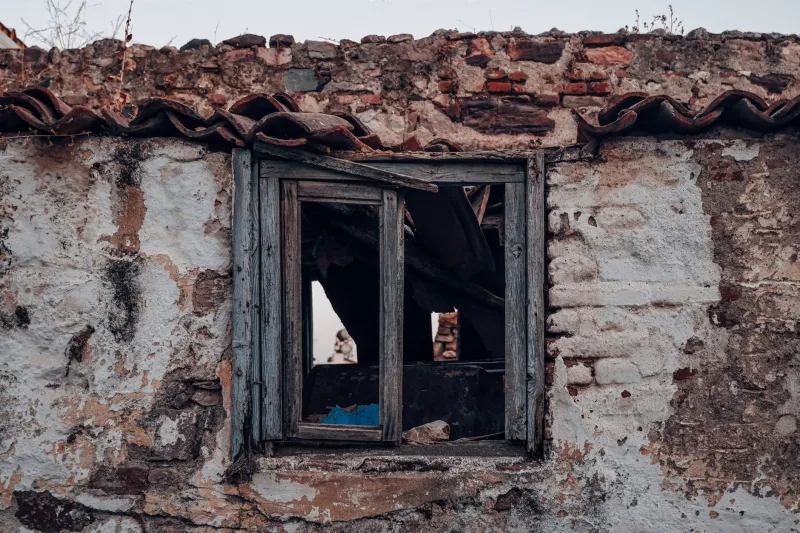
Under the Akiya Special Measures Act, municipal governments are empowered to designate certain vacant properties as "Specified Vacant Houses." This designation applies to structures that meet one or more of the following criteria: the building poses a risk of collapse, it is visually deteriorated to a degree that significantly diminishes the surrounding environment, it creates fire or hygiene hazards, or its condition otherwise threatens neighborhood safety.
Once a property receives this designation, the municipality may issue a series of escalating administrative actions. These begin with guidance and recommendations directed at the registered owner. If the owner fails to respond or remediate, the municipality may issue a formal order to repair or demolish. Should the owner continue to remain unresponsive, local authorities are legally authorized to carry out the demolition themselves and bill the owner for the full cost—a process known as administrative enforcement, or gyosei daishikko.
Critically, demolition costs in Japan are not trivial. Depending on the structure's size, materials, and accessibility, removing a traditional wooden farmhouse can run anywhere from several hundred thousand yen to well over one million yen. At current exchange rates, that translates to a liability of roughly $2,000 to $10,000 or more—occasionally exceeding the original purchase price many times over.
Why American Buyers Are Particularly Vulnerable
Foreign nationals purchasing akiya face a compounding set of risks that domestic buyers may be better positioned to manage. Geographic distance is the most obvious factor. An American owner living in California or Texas cannot easily respond to a municipal notice issued in Japanese and delivered to a rural address in Nagano or Tokushima. Without a trusted local representative or a property management arrangement, critical correspondence may go unanswered—triggering the very escalation that leads to enforced demolition and billing.
Language barriers further complicate matters. Japanese municipal communications are rarely translated, and the administrative timelines embedded within official notices are easy to misread even for fluent speakers. An overseas buyer relying on occasional correspondence from a real estate agent, without a dedicated point of contact for regulatory matters, is operating with a meaningful blind spot.
There is also a cultural dimension to consider. In Japan, the concept of property stewardship carries social weight. A visibly deteriorating structure does not merely affect its owner—it affects neighbors, local commerce, and community morale. Municipal governments in declining rural areas, already strained by shrinking tax bases, have become increasingly motivated to pursue enforcement as a fiscal and social priority. The era of passive tolerance for crumbling akiya is drawing to a close.
How Enforcement Trends Have Shifted in Recent Years
The 2023 revisions to the Akiya Special Measures Act introduced a new category of concern: "Vacant Houses That Are Likely to Become Specified Vacant Houses." This proactive designation allows municipalities to intervene earlier in a property's deterioration cycle, issuing guidance before a structure reaches the threshold of active danger. For buyers considering properties that are already visibly aged or structurally compromised, this shift in enforcement posture is significant.
Several prefectures have also begun cross-referencing property ownership records with utility disconnection data and resident registration files to identify vacant properties more systematically. In some municipalities, aerial drone surveys and street-level assessments are being employed to catalog candidate properties for designation. The practical effect is that akiya owners—domestic and foreign alike—can no longer assume that a quiet, unvisited property will remain below the administrative radar indefinitely.
Conducting Structural Due Diligence Before Committing Capital
The most effective defense against demolition liability is a thorough pre-purchase assessment of the property's structural condition. This begins with commissioning an independent building inspection from a licensed Japanese architect or structural engineer—not a cursory walkthrough arranged by the selling agent, but a formal evaluation that examines the foundation, roof framing, load-bearing walls, and any evidence of termite damage or moisture infiltration.
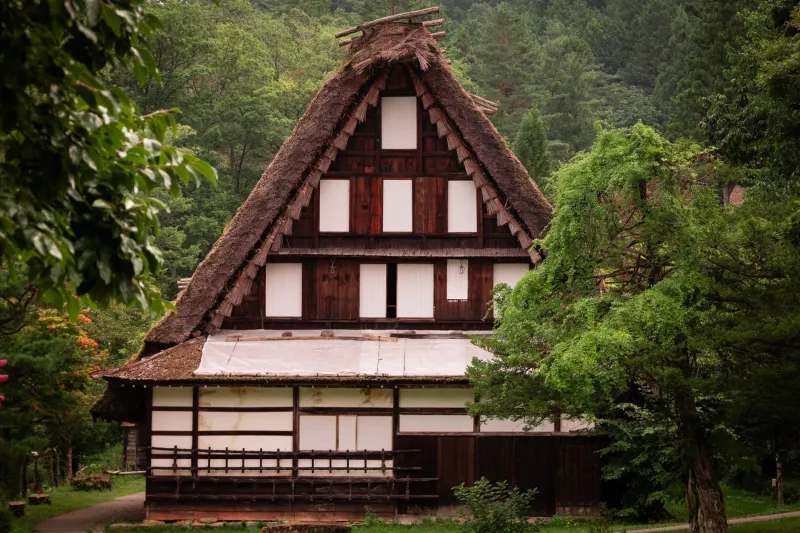
Traditional Japanese farmhouses, or minka, often feature post-and-beam construction that can be remarkably durable when maintained, but deeply problematic when left to deteriorate. Roof failures, foundation settling, and wood rot are among the most common structural deficiencies that elevate a property's risk profile under the Akiya Special Measures Act. A qualified inspector can provide a written assessment that not only describes current conditions but estimates the cost of remediation—giving the prospective buyer a realistic picture of what restoration will actually require.
Beyond the physical inspection, buyers should request a copy of the municipal records for the property. This includes checking whether the structure has already received any informal guidance or preliminary designation under the Act. A reputable acquisition advisor or legal representative based in Japan can submit this inquiry on the buyer's behalf and interpret the findings accurately.
Establishing a local property management relationship prior to closing is equally important. A property manager who can receive mail, respond to municipal inquiries, and conduct periodic site visits provides a critical layer of protection against the communication failures that leave overseas owners exposed.
Turning Awareness Into Advantage
It would be a mistake to read this article as a caution against akiya investment broadly. The structural risks and legal obligations described here are entirely manageable—provided they are understood before, rather than after, a purchase is made. Many of the properties available through Japan's akiya programs are structurally sound, located in communities actively seeking restoration partners, and eligible for municipal subsidies that can offset renovation costs substantially.
The buyers who fare best in this market are not those who move fastest or bid lowest. They are the ones who invest in proper due diligence, build relationships with qualified local professionals, and enter each transaction with a clear-eyed understanding of both the opportunity and the obligation that Japanese property ownership entails.
At Akiya Rescue, our approach to guiding overseas buyers through the Japanese rural property market is grounded in exactly this kind of informed preparation. A property that appears to be a liability on paper can often be rescued, restored, and transformed into something of genuine value—for the buyer, for the community, and for the home itself. But that transformation begins with knowing what you are acquiring, in full, before you sign.