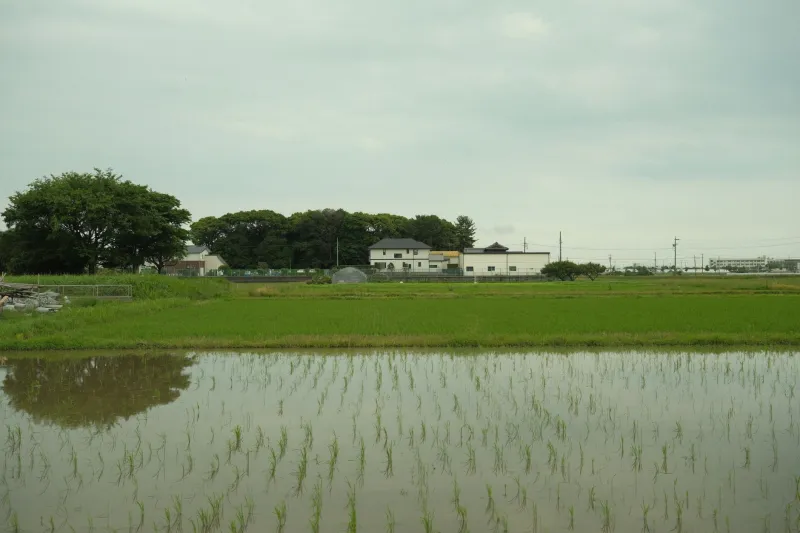
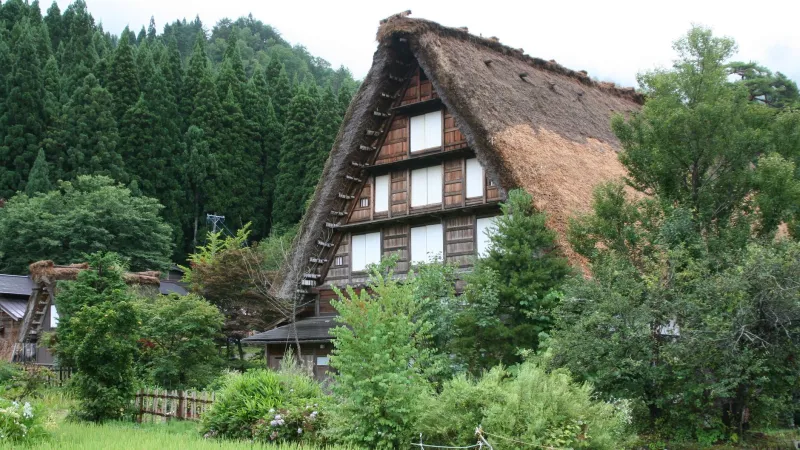
The Clock Is Running: How Delays Are Quietly Draining the Akiya Investment Opportunity for American Buyers
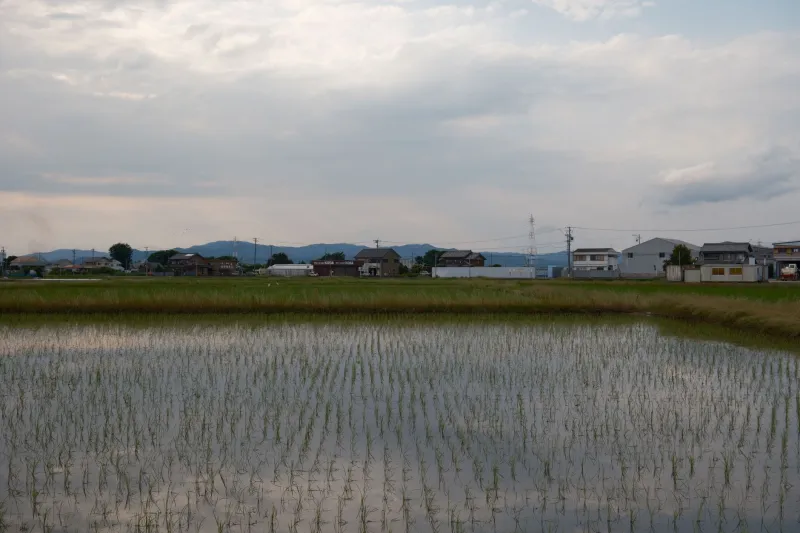
For the better part of a decade, Japan's abandoned property market has been described in breathless terms — a once-in-a-generation opening, a structural anomaly in one of the world's most sophisticated real estate economies, a chance to acquire historic homes in a stable, developed nation for prices that would not cover a single month's rent in San Francisco. That description remains partially accurate. But the operative word, increasingly, is partially.
The financial calculus surrounding akiya — Japan's estimated eight million or more vacant and abandoned homes — has grown meaningfully more complicated. For American investors who have been watching from the sidelines, building spreadsheets, and waiting for the "right moment," the uncomfortable reality is this: the waiting itself carries a cost. And that cost is compounding.
What the Yen Has Done to Your Purchasing Power
In 2021, one US dollar purchased approximately 110 Japanese yen. By late 2022, that figure had climbed above 150 yen, a movement that made Japanese assets dramatically cheaper for dollar-denominated buyers. Many observers assumed this represented a durable new baseline. It did not.
The yen has since experienced meaningful volatility, with the Bank of Japan signaling a gradual shift away from its ultra-loose monetary policy stance. In April 2024, Japan raised interest rates for the first time in seventeen years. While the yen remains historically weak by longer-term measures, analysts at several major financial institutions have projected a gradual strengthening trend as Japanese monetary policy normalizes. A buyer who converted $200,000 USD to yen in mid-2022 received considerably more purchasing power than one making the same conversion today — and potentially far more than one who waits another two or three years.
This is not speculation. It is arithmetic. The exchange rate tailwind that made akiya properties appear almost implausibly affordable is not a permanent feature of the landscape. It is a window, and windows close.
Renovation Costs Are Rising — and Rapidly
Beyond currency dynamics, the cost of restoring an akiya has itself increased substantially. Japan's construction and renovation sector is experiencing a labor shortage that mirrors, in some respects, the skilled trades deficit familiar to American homeowners. An aging workforce, declining apprenticeship rates in traditional carpentry and joinery, and increased domestic demand for renovation services — driven partly by government incentive programs encouraging akiya rehabilitation — have pushed labor costs upward.
Consider two investors in the same rural prefecture. The first engaged a local renovation contractor in 2020 to restore a 1960s-era farmhouse. Total restoration costs, including structural repairs, updated electrical systems, and traditional aesthetic preservation, came in at approximately 4.5 million yen. A comparable project undertaken by a second investor in the same region in 2024 was quoted at nearly 7.2 million yen — a 60 percent increase in four years, with the contractor noting that his team's availability had shrunk considerably due to competing municipal contracts.
The acquisition price of the akiya itself may still be negligible. But the total cost of ownership — the figure that actually determines whether a project pencils out — is moving in one direction.
The Competitive Landscape Has Changed
Americans are not the only foreign nationals who have discovered the akiya market. Buyers from Australia, Canada, the United Kingdom, Germany, and increasingly Southeast Asia have entered the space in growing numbers. More significantly, organized investment groups — rather than individual buyers — have begun acquiring clusters of properties in desirable rural towns, particularly those near bullet train access points or established tourist infrastructure.
In certain prefectures, local akiya banks — the municipal registries through which many vacant properties are listed — now report wait times for viewings and significantly increased competition for properties in better structural condition. Towns that once listed dozens of homes with zero inquiries are now fielding multiple expressions of interest for their more appealing inventory.
This competitive pressure is not yet uniform across Japan's vast rural geography. There remain regions, particularly in depopulating areas of the Chugoku, Shikoku, and Tohoku districts, where acquisition costs remain extremely low and competition minimal. But the premium tier of the akiya market — properties with intact traditional architecture, functional infrastructure, and proximity to transportation — is tightening.
Two Investors, Two Outcomes
The divergence between decisive action and prolonged deliberation is perhaps best illustrated through direct comparison.
A retired educator from Portland, Oregon, began researching akiya properties in 2021. After eighteen months of research, she engaged a property sourcing service, identified a traditional kominka farmhouse in Hyogo Prefecture, and completed her acquisition in early 2023. Total acquisition cost: effectively zero, with the property transferred through a municipal program. Renovation investment: approximately $38,000 USD at the exchange rate prevailing at the time of her contractor payments. She now operates the property as a short-term rental for international visitors, generating sufficient income to cover annual carrying costs with a modest surplus.
A software architect from Austin, Texas, identified a comparable property in the same general region at roughly the same time. He spent two additional years in the research phase, consulting advisors, revisiting projected renovation budgets, and waiting for greater clarity on Japanese property law for foreign nationals. By the time he reengaged with the market in early 2025, his target property had been acquired by another buyer, renovation costs in the area had risen appreciably, and the yen had strengthened modestly from its weakest point. His revised budget for an equivalent project is now roughly 35 percent higher in dollar terms than it would have been at his original point of consideration.
Neither outcome is extreme. But the differential is real, measurable, and entirely attributable to timing.
What the Next Decade May Hold
Japan's demographic trajectory — an aging population, sustained low birth rates, and limited immigration — ensures that the supply of vacant rural properties will not disappear in the near term. In that narrow sense, the akiya market will remain a feature of Japan's real estate landscape for years to come. However, several structural forces are likely to reshape its character.
Government policy is actively evolving. Japan's 2023 amendments to its Special Measures Act on Vacant Houses granted municipalities expanded authority to compel the demolition or transfer of deteriorating properties. As enforcement increases, the pool of structurally viable akiya available at low or no cost will gradually contract. Properties that are not rescued will, over time, be removed from the market entirely — not through sale, but through condemnation and clearance.
Simultaneously, Japan's tourism sector continues to recover and expand, driving demand for authentic rural accommodation experiences that well-restored akiya are uniquely positioned to provide. The intersection of cultural tourism, remote work migration, and lifestyle investment is creating new categories of value in the Japanese countryside — value that did not exist in the same form a decade ago, and that early movers are already capturing.
Professional advisors with direct experience in the Japanese rural property market broadly agree on one point: the opportunity is real, but it is not static. The conditions that made akiya investment appear almost risk-free to early participants — near-zero acquisition costs, minimal competition, and an exceptionally favorable exchange rate — are eroding, incrementally but persistently.
The Cost of Waiting Has a Number
For American investors still weighing their options, the honest accounting of inaction includes not only foregone rental income or appreciation, but also the widening gap between current project costs and what those same projects would have cost two or three years ago. It includes the properties no longer available, the contractors whose schedules are now fuller, and the exchange rate that may not return to its most favorable levels.
The akiya market remains one of the more compelling property investment propositions available to American buyers with international flexibility. But compelling opportunities are not indefinitely patient. The mathematics of delay, examined honestly, argue for a different kind of deliberation — not less careful, but considerably more timely.