The Closing Window: Why Delayed Decisions on Japanese Abandoned Properties Are Becoming Increasingly Costly
For years, Japan's surplus of abandoned rural homes — known as akiya — has been framed as an essentially inexhaustible resource. With estimates placing the number of vacant properties above eight million nationwide, many prospective foreign buyers have assumed that time is on their side. That assumption, according to mounting evidence, is becoming dangerously outdated.
A convergence of policy shifts, municipal demolition programs, and evolving legal frameworks is steadily narrowing the window during which international buyers can access Japan's most appealing rural properties at historically favorable prices. For Americans who have been deliberating, the financial cost of continued hesitation may already be compounding.
From Abundance to Attrition: How Inventory Is Quietly Shrinking
The raw number of akiya in Japan remains large, but that figure obscures a more important reality: not all vacant homes are equally viable. A meaningful share of the total inventory consists of structures in advanced states of deterioration — properties that have passed the threshold of cost-effective restoration. When those are subtracted from the pool, the universe of genuinely restorable homes is considerably smaller, and it is shrinking.
Local governments across rural Japan have accelerated demolition programs in recent years, motivated in part by liability concerns and community revitalization priorities. In prefectures such as Shimane, Tottori, and parts of Nagano, municipal authorities have gained expanded authority to designate structurally unsafe properties for removal — and in some cases, to proceed with demolition even when ownership is disputed or unclear. Properties that might have been available for purchase two years ago have, in several documented instances, simply ceased to exist.
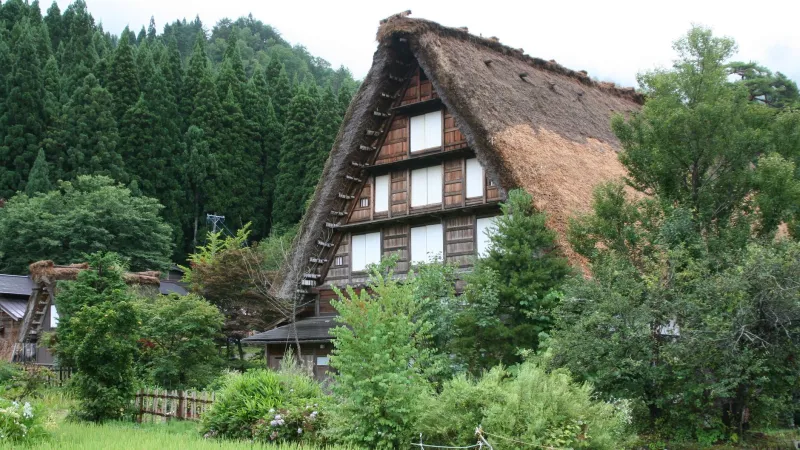
One prospective buyer who contacted Akiya Rescue in late 2023 had identified a traditional kominka farmhouse in a mountain village in Gifu Prefecture. After a period of extended deliberation — spanning approximately fourteen months — she returned to inquire about the property only to learn that the local government had flagged it for demolition under a newly enacted regional ordinance. The home, which had been listed informally for under five million yen, was gone. Replacement options in the same village with comparable characteristics were either unavailable or priced significantly higher due to recent infrastructure improvements in the area.
That story is not unique. It is, increasingly, a pattern.
Incentive Structures Are Evolving — Not Always in Buyers' Favor
Much of the early enthusiasm among American buyers was driven by the remarkable incentive programs offered by Japanese municipalities eager to attract new residents. Subsidies covering renovation costs, relocation allowances, and even outright grants for purchasing and occupying akiya properties generated substantial international media coverage — and for good reason. Those programs represented genuine, tangible value.
However, the structure of those incentives has not remained static. Several municipalities have revised eligibility criteria, tightened residency requirements, or reallocated funding as budgetary pressures mounted. A program that offered a renovation subsidy of up to one million yen to qualified buyers in 2021 may have been modified, reduced, or discontinued entirely by the time a buyer who first read about it in an American publication finally moves to apply.
Equally significant is the directional shift in who those incentives are increasingly designed to serve. As domestic interest in rural revitalization has grown — driven in part by remote work trends accelerated by the pandemic — some municipal programs that were originally structured with foreign buyers in mind have been reoriented toward domestic applicants. The competitive landscape for the best-supported properties has changed, even if the headline availability figures have not.
The Regulatory Variable: New Laws, New Complications
Japan's legal framework governing real estate ownership and property registration has historically been one of the structural factors enabling the akiya phenomenon in the first place. Unclear ownership chains, absent heirs, and unregistered transfers created the conditions under which millions of homes fell into effective legal limbo.
In April 2024, Japan enacted mandatory real estate registration reforms requiring heirs to formally register inherited properties within three years of acquisition or death of the original owner. While primarily intended to resolve the ownership ambiguity that has long frustrated domestic buyers and municipal planners alike, the reform has introduced new dynamics for foreign buyers as well.
On one hand, clearer title chains may eventually make more properties legally accessible. On the other, the reform has prompted a wave of heir-initiated property assessments — some of which have resulted in previously uncontested akiya being claimed, listed at market rates, or transferred to domestic buyers before international buyers had an opportunity to engage. The short-term effect of greater legal clarity has, paradoxically, been increased competition for properties that were previously overlooked.
What the Numbers Suggest About Timing
Constructing a precise financial model for the cost of delay is inherently imprecise, given the variability across regions and property types. Nevertheless, directional data points are instructive.
In several rural prefectures that experienced increased foreign buyer interest between 2019 and 2023, informal asking prices for comparable akiya properties rose between fifteen and forty percent over that period — even as the broader Japanese real estate market remained relatively subdued. Properties in villages with reliable shinkansen or limited express rail access to major urban centers have appreciated most sharply. The ones that remain affordable tend to be in locations with more limited infrastructure — a trade-off that buyers who waited are now navigating.
Beyond purchase price, renovation cost trajectories further complicate the calculus. Material and labor costs in Japan, while still favorable compared to American markets, have risen meaningfully. A restoration project budgeted at eight million yen in 2021 may carry a substantially higher estimate today for equivalent scope and quality of work.
For a buyer operating on a fixed retirement budget — a profile common among Akiya Rescue's American clients — these compounding cost pressures represent real constraints on the type of property that remains within reach.
Acting Deliberately, Not Impulsively
None of this is an argument for reckless urgency. Purchasing rural property in a foreign country is a consequential decision that warrants careful due diligence, professional guidance, and a clear understanding of one's own financial and lifestyle objectives. Akiya Rescue has always emphasized the importance of informed, methodical decision-making over reactive purchasing.
What the evidence does suggest, however, is that the framing of akiya acquisition as a low-pressure, indefinitely available opportunity no longer reflects market conditions with accuracy. The buyers who secured the most compelling properties at the most favorable terms tended to act within a defined window — and that window, in many of the most desirable rural communities, has already begun to close.
For Americans who have been researching, bookmarking, and intending to revisit the question of a Japanese rural property, the more useful question may no longer be whether to proceed — but how soon a serious evaluation can realistically begin.
The homes are still there. Fewer of them, and at higher cost than before — but still there. The question is how much longer that will remain true.