Renovating from Afar: How Digital Tools Are Putting Akiya Restoration Within Reach of Overseas Buyers

For most Americans, the idea of purchasing and restoring a centuries-old Japanese farmhouse while living in Denver or Atlanta has historically belonged in the realm of wishful thinking. The logistical obstacles were simply too formidable: language barriers, inaccessible contractor networks, no reliable way to verify workmanship, and the ever-present anxiety of wiring substantial funds toward a project you could not physically observe.
That calculus is changing with remarkable speed. A new generation of digital tools — remote site monitoring, AI-assisted structural assessment platforms, and internationally compatible project management software — is making it genuinely feasible for overseas investors to shepherd akiya restorations from thousands of miles away. The question worth asking, however, is which of these solutions represent true value, and which are little more than well-marketed novelties.
The Problem Technology Is Solving
Japan's akiya crisis is well documented. Estimates place the number of vacant homes across the country at well over eight million, with rural prefectures bearing a disproportionate share of that burden. Many of these properties carry price tags that would seem implausibly low to any American accustomed to coastal real estate markets — sometimes in the range of tens of thousands of dollars, occasionally less.
The structural and logistical challenge, however, has always been the renovation process itself. Traditional Japanese construction methods, aging electrical systems, and the potential for hidden water or seismic damage require expert evaluation. Coordinating that evaluation — and the subsequent restoration work — from abroad once demanded either a trusted local intermediary or the willingness to make multiple costly trips to Japan. For many prospective buyers, neither option was practical.
Remote Eyes on the Ground
One of the most consequential developments in recent years has been the proliferation of affordable, high-resolution site monitoring systems. These are not the rudimentary security cameras of a decade ago. Today's systems offer 4K video feeds, time-lapse construction documentation, motion-triggered alerts, and live-streaming capabilities that allow an investor in Portland, Oregon to watch a contractor install traditional shoji screens in Hyogo Prefecture in real time.
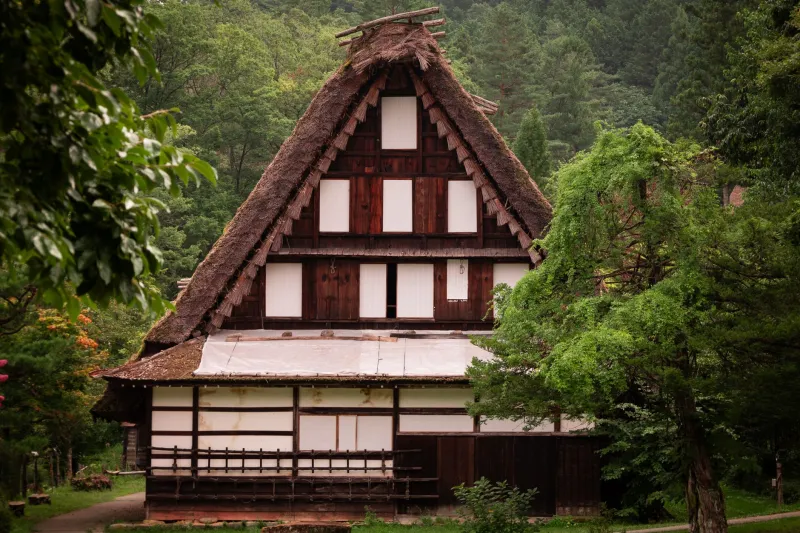
Michael Hartley, a retired civil engineer from Tucson, Arizona, used exactly this kind of setup when he purchased a thatched-roof kominka — a traditional Japanese farmhouse — in rural Niigata in 2022. "I had four cameras installed before the renovation crew even started," he explains. "Every morning I'd pull up the feed with my coffee. When I noticed a section of subflooring being replaced differently than what we had agreed upon, I flagged it immediately through our project management app. The contractor adjusted the approach that same afternoon."
Hartley's experience is increasingly common among buyers working with advisory services that specialize in connecting overseas investors with vetted Japanese contractors and local coordinators.
AI-Assisted Structural Assessment: Promise and Limitations
Perhaps the most discussed — and most frequently overhyped — technology in this space is AI-driven structural analysis. Several platforms now offer services in which users upload photographs, video walkthroughs, or drone footage of a property, and receive an algorithmic assessment of structural integrity, estimated repair costs, and potential red flags.
The results can be genuinely useful as a preliminary screening tool. Jennifer Cho, an architect based in Seattle who has consulted on multiple akiya acquisitions, notes that these platforms are "reasonably effective at identifying obvious structural deformation, significant roof deterioration, or signs of long-term moisture intrusion — things that are visually apparent if you know what to look for."
However, she is careful to contextualize their utility. "AI assessment is a filter, not a verdict," she says. "It helps buyers avoid wasting money on an in-person inspection of a property that is clearly beyond viable restoration. But it cannot replace a licensed Japanese building inspector who can physically probe the foundation, test the soil, and evaluate the structure against current seismic codes."
The consensus among professionals in this space is consistent: AI tools deliver meaningful ROI when used as a triage mechanism in the early stages of due diligence. They are not a substitute for qualified human expertise.
Project Management Across Time Zones
Beyond monitoring and assessment, the operational challenge of coordinating a renovation across a twelve-to-seventeen-hour time difference is itself non-trivial. A contractor in Kyoto operates on a schedule that is almost perfectly inverted from that of a client in New York.
Cloud-based project management platforms — particularly those offering multilingual interfaces or built-in translation features — have proven transformative in bridging this gap. Tools such as Asana, Monday.com, and purpose-built construction management applications allow buyers and contractors to log updates, share photographs, track milestone completion, and flag issues asynchronously. Neither party needs to be awake at the same time for communication to remain continuous.
David and Patricia Summers, a couple from suburban Minneapolis who completed a two-year akiya restoration in Shimane Prefecture in 2023, credit this kind of structured communication with saving their project during a particularly difficult phase. "We hit an unexpected issue with the well system midway through," Patricia recalls. "Because everything was documented in real time on the platform, our coordinator in Japan and our contractor could assess the problem, obtain quotes, and present us with options — all before we woke up the next morning. We made a decision over breakfast and work resumed that same day in Japan."
What Actually Delivers Return on Investment
For American investors approaching akiya restoration as a financial proposition — whether for rental income, resale, or long-term asset holding — the technology question ultimately comes back to value creation. Which tools justify their cost?
The clearest returns appear in three areas. First, remote monitoring reduces the risk of contractor disputes and workmanship discrepancies, protecting the investor's capital. Second, AI-assisted screening reduces the expense of preliminary site visits by filtering out properties that are structurally non-viable before significant travel costs are incurred. Third, structured digital project management reduces timeline overruns, which in renovation projects are almost always the primary driver of budget erosion.
What tends to deliver less reliable returns are premium smart-home integration packages marketed specifically to foreign buyers — automated lighting systems, IoT-connected appliances, and high-end environmental sensors that may impress during a rental listing but rarely justify their installation cost in rural Japanese markets where rental demand is modest.
A Practical Framework for Overseas Buyers
For those considering an akiya acquisition, the technology stack need not be elaborate to be effective. A straightforward approach might include a reliable camera monitoring system with cloud storage, a shared project management platform with multilingual capability, and access to at least one AI structural screening tool for early-stage property evaluation. Beyond that, the single most important investment remains a trusted local coordinator — a human being with on-the-ground relationships, cultural fluency, and the ability to walk through a property and make judgment calls that no algorithm has yet learned to replicate.
Japan's abandoned homes are not waiting for a technological revolution to make them viable. They are waiting for thoughtful investors with the right combination of tools, partners, and patience. The digital infrastructure now exists to support that investment in ways that simply were not available five years ago. The opportunity, for those willing to engage it seriously, has rarely been more accessible.