What the Purchase Price Doesn't Tell You: Japan's Property Tax Relief for Akiya Restoration Investors
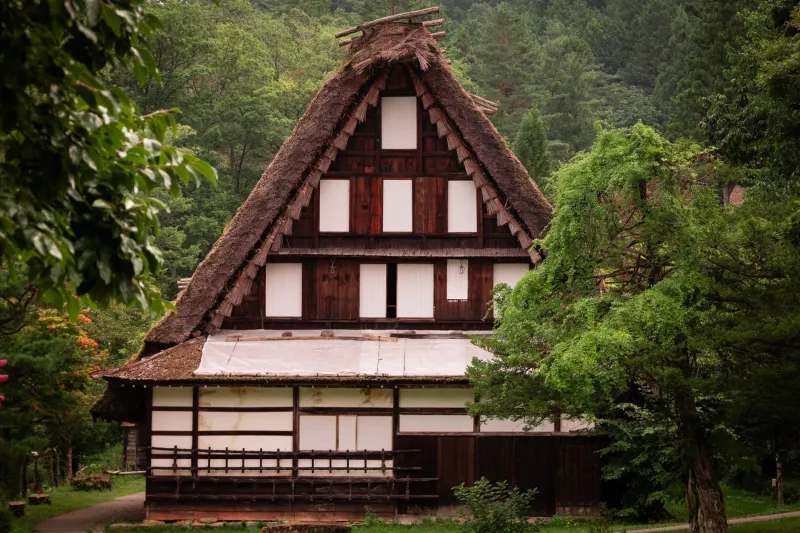
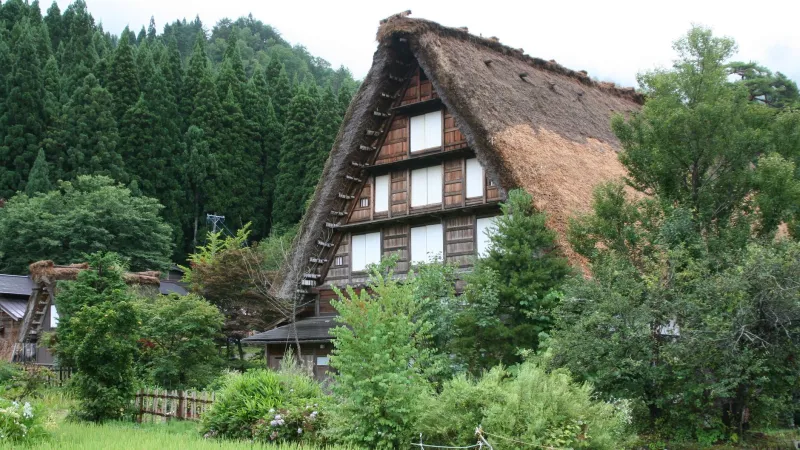
When American buyers first encounter the price tags attached to Japan's akiya — the country's vast inventory of abandoned rural homes — the numbers can seem almost implausible. Properties listed for the equivalent of a few thousand dollars. Transfer fees that pale against anything in the United States. Carrying costs that appear, at first glance, almost negligible.
But the financial case for akiya investment doesn't end at acquisition. For those who commit to genuine restoration, Japan's tax system offers a second layer of advantage that most overseas buyers never fully explore. Property tax exemptions, municipal subsidy programs, and incentive structures tied to rural revitalization goals can dramatically reshape the long-term economics of ownership — in ways that rarely appear in the headline figures circulating in American real estate circles.
Understanding these benefits requires patience and a willingness to engage with administrative frameworks that differ substantially from anything familiar to US property owners. The effort, however, is worth it.
How Japan Structures Property Taxation
Before examining the exemptions, it helps to understand the baseline. Japan imposes two primary annual taxes on real property: the kotei shisan-zei, or fixed assets tax, and the toshi keikaku-zei, or city planning tax. Together, these typically amount to between 1.4% and 0.3% of the property's assessed value respectively — figures that, on a modestly valued rural home, translate to annual obligations that may seem trivial by American standards.
However, there is a critical nuance that akiya buyers must understand from the outset. Under Japanese tax law, land on which a residential structure stands receives a preferential assessment — commonly reducing the taxable land value to one-sixth of its standard rate for plots up to 200 square meters. This exemption applies automatically to inhabited residential properties.
The complication arises when a structure is demolished or allowed to deteriorate to the point where local authorities reclassify it as non-residential. In those cases, the land loses its preferential status, and the tax burden on the underlying plot can increase sixfold overnight. This is one of the primary reasons many Japanese landowners have historically chosen to leave deteriorating structures standing rather than clear them — a counterintuitive dynamic that has contributed directly to the akiya crisis itself.
For foreign buyers, this means that purchasing an akiya with the intention of restoration — rather than demolition — preserves the residential exemption and the tax advantages that accompany it.
The Restoration Incentive Layer
Beyond the baseline residential exemption, a growing number of Japanese municipalities have introduced targeted relief programs specifically designed to encourage akiya renovation. These programs vary considerably by prefecture and township, but several common structures have emerged across rural Japan.
The most prevalent is a temporary property tax reduction tied to completed renovation work. In participating municipalities, owners who undertake qualifying restorations — typically defined as structural repairs, seismic reinforcement, or energy efficiency upgrades meeting specific standards — may receive reductions of up to 50% on their fixed assets tax assessment for a defined period, often between three and five years following project completion.
Some prefectures, particularly those with aggressive rural repopulation goals, extend these periods further. Certain areas in Shimane, Tokushima, and Niigata prefectures have offered relief windows of up to ten years for restorations that meet additional criteria, such as bringing the property into compliance with current earthquake resistance standards — a meaningful consideration given Japan's seismic environment.
For American buyers working with a restoration budget in the range of $30,000 to $80,000 — a common range for moderate akiya projects — these annual reductions can compound into total savings that meaningfully offset renovation expenditure over a decade of ownership.
Real-World Illustrations
Consider a scenario that reflects patterns seen among American buyers who have worked through the akiya acquisition process in recent years.
A retired couple from Oregon purchases a farmhouse in rural Hyogo Prefecture for the equivalent of approximately $18,000. The assessed value of the property for tax purposes is set at roughly $40,000 — a figure that, under standard rates, would generate annual fixed assets tax obligations of around $560. With the residential land exemption intact, that figure drops significantly on the land component alone.
Following a renovation that brings the structure into compliance with current seismic standards at a total cost of approximately $55,000, the couple applies through the local municipal office for the post-renovation tax reduction program. The municipality approves a 50% reduction on the improved property's fixed assets assessment for five years. Over that period, the cumulative tax savings approach $1,400 — modest in absolute terms, but meaningful as a percentage of total ownership cost on a low-value rural property.
In a second case, a buyer from California acquires a vacant machiya townhouse in a designated rural revitalization zone in Tottori Prefecture. Because the property falls within a zone where the municipal government has committed to aggressive depopulation countermeasures, the buyer qualifies for an extended relief window of seven years following renovation completion, alongside a separate subsidy grant covering a portion of the seismic reinforcement costs. The combined effect reduces the effective carrying cost of the property for nearly a decade.
These examples are not outliers. They reflect the deliberate policy architecture that Japanese local governments have constructed to make restoration economically viable — and to attract the kind of committed, long-term ownership that vacant properties have lacked.
Navigating the Application Process as a Foreign Buyer
Accessing these benefits requires proactive engagement with local municipal offices, typically through a Japanese-speaking representative, legal advisor, or specialist intermediary. Most relief programs are not automatically applied — they require formal application, documentation of completed work, and in some cases, inspection by municipal assessors.
Foreign buyers should be aware that eligibility criteria can include residency requirements or minimum occupancy periods in certain municipalities. Some programs are designed specifically for primary residences rather than investment properties, which may affect how American buyers structure their ownership and intended use. Working with a qualified gyoseishoshi — an administrative scrivener — or a real estate attorney familiar with rural property law is strongly advisable before assuming any specific program applies to a given acquisition.
Tax treaties between Japan and the United States add another layer of consideration. American buyers will need to account for how Japanese property taxes interact with their US tax obligations, particularly with respect to foreign tax credits and the reporting requirements that accompany overseas real estate holdings.
The Broader Financial Picture
What the tax exemption framework ultimately reveals is that the financial logic of akiya investment is more sophisticated than the low purchase prices alone suggest. Japan has, in effect, built a quiet subsidy structure into its rural property system — one designed to reward restoration over neglect, occupancy over vacancy, and long-term stewardship over short-term speculation.
For American buyers who approach akiya acquisition with genuine restoration intent and a willingness to engage with the administrative requirements, the result is a property ownership experience where carrying costs remain low, tax obligations are actively reduced, and the underlying asset contributes to something larger than a personal balance sheet.
The purchase price opens the door. The tax structure is what makes staying worthwhile.