Villages That Refused to Disappear: A Field Guide to Japan's Most Promising Rural Revivals
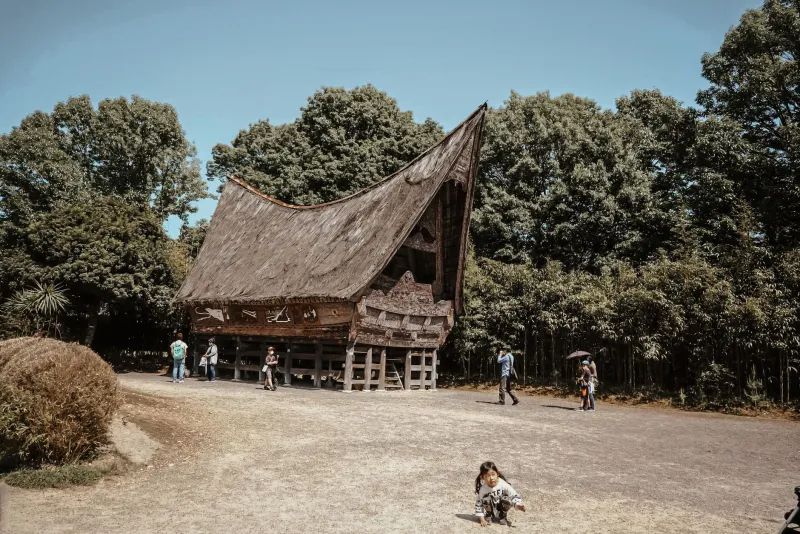
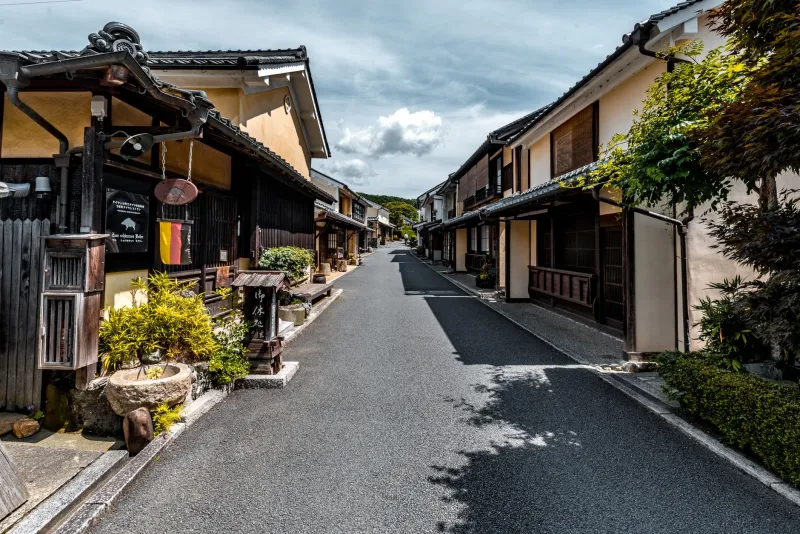
Japan's rural depopulation crisis has generated an enormous volume of hand-wringing commentary. What receives far less attention is the countercurrent — the handful of communities that have, through a combination of policy innovation, cultural openness, and strategic property investment, begun genuinely reversing their demographic slide. For American investors evaluating akiya opportunities, these villages represent something rare and valuable: proof that the trend is not always irreversible.
The question is how to find them, and more importantly, how to distinguish authentic momentum from municipal wishful thinking.
The Difference Between Publicity and Progress
Not every village that announces a revitalization program is actually revitalizing. Japan's municipal governments have become sophisticated at generating favorable press coverage for akiya initiatives, and the gap between a well-publicized program and a genuinely recovering community can be substantial. Several towns have spent considerable public funds on glossy brochures and bilingual websites while their registered populations continued to contract.
The more reliable indicators are quieter. Watch for net migration figures rather than gross arrival numbers. A village that attracts twenty new residents while losing thirty is still in decline, regardless of how its tourism board frames the story. Seek out communities where the number of occupied homes is measurably increasing, where school enrollment has stabilized or grown, and where local commercial activity — grocery stores, hardware suppliers, small restaurants — is expanding rather than consolidating.
In Nishiawakura, a village in Okayama Prefecture, these markers have been moving in the right direction for over a decade. The community's forest management cooperative has attracted young professionals from urban centers, and its akiya bank — one of the more actively administered in the country — has facilitated dozens of successful property transfers to outside buyers, including several foreign nationals. The village's population remains small, but its trajectory has reversed in measurable, verifiable terms.
What the Successful Communities Have in Common
Across the villages that have demonstrably turned a corner, several structural characteristics recur with enough consistency to serve as a working framework for American buyers.
Dedicated administrative support. Communities with the strongest revival records tend to maintain at least one full-time staff member whose explicit mandate is property matching and buyer onboarding. This person serves as a translator of bureaucratic complexity, a connector between incoming buyers and local contractors, and an informal ambassador between newcomers and established residents. Where this role exists and is well-funded, transaction completion rates are meaningfully higher.
Flexible zoning and renovation incentives. The most competitive communities have moved beyond simply listing vacant properties and now offer structured financial incentives for restoration — subsidized renovation loans, property tax abatements for occupied akiya, and in some cases outright grants for buyers who commit to permanent or semi-permanent residency. Kamiyama, in Tokushima Prefecture, has become a benchmark for this approach, attracting creative professionals and small technology firms through a combination of affordable properties and an unusually progressive local government.
Existing foreign resident networks. A community that already has a small but established population of foreign residents has cleared a critical cultural threshold. These early arrivals have navigated the social integration process, built relationships with local institutions, and often serve informally as guides for subsequent buyers. Their presence signals that the village has the capacity — and the willingness — to absorb outside investment without significant friction.
Reading the Data Before You Read the Listing
American buyers accustomed to domestic real estate research will find Japan's publicly available demographic data both more granular and more accessible than they might expect. The Statistics Bureau of Japan publishes municipal population data updated annually, and the Ministry of Land, Infrastructure, Transport and Tourism maintains regional housing vacancy surveys that can be cross-referenced against akiya bank listings to identify communities where supply is shrinking rather than growing.
A shrinking akiya inventory is, counterintuitively, a positive signal. It suggests that properties are being absorbed — either through sale, renovation, or demolition — faster than new vacancies are being created. Communities where the vacant housing stock is growing year over year are generally experiencing continued decline regardless of any official revitalization narrative.
Also worth examining: local school data. Elementary school enrollment figures are among the most honest leading indicators of community health available. A village that has reversed enrollment decline, or that has managed to keep a school open through creative consolidation or remote learning programs, is demonstrating a form of institutional resilience that correlates strongly with broader recovery.
The Investor's Calculus
For American buyers, the strategic implication of this analysis is straightforward, if occasionally counterintuitive. The most attractively priced akiya properties are often located in the most deeply distressed communities — villages where the demographic math is genuinely unfavorable and where no amount of municipal enthusiasm is likely to change the trajectory within any reasonable investment horizon.
The better opportunity, from a long-term value perspective, lies in communities that have already demonstrated measurable recovery. Prices in these villages are higher than in their more distressed counterparts, but they reflect real underlying momentum rather than speculative optimism. The buyer who pays a modest premium for a property in a genuinely recovering community is purchasing something qualitatively different from the buyer who acquires a deeply discounted home in a village that may not sustain basic services within a decade.
Japan's rural renaissance is real, but it is geographically specific. The work of identifying which villages belong in that category — and which are simply well-marketed — is among the most valuable research an American akiya buyer can undertake before committing to a property.