The Tax Advantage Nobody Mentions: How Japan's Property Code Rewards Akiya Restoration
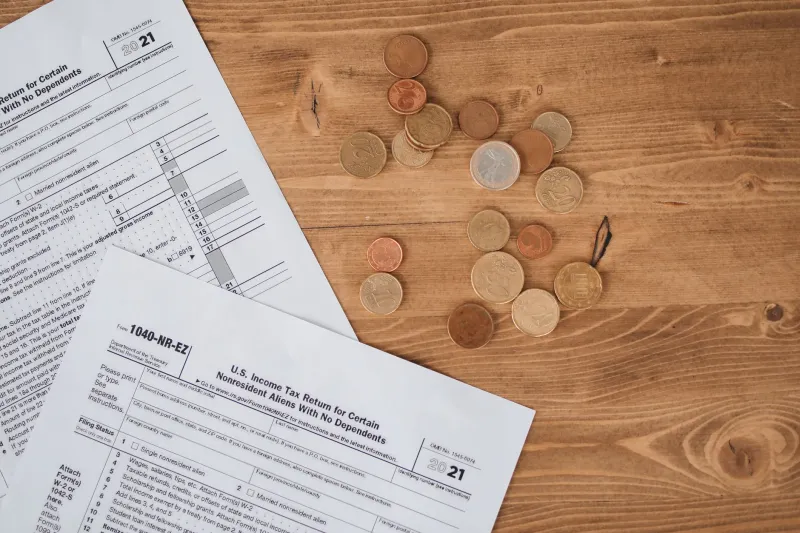
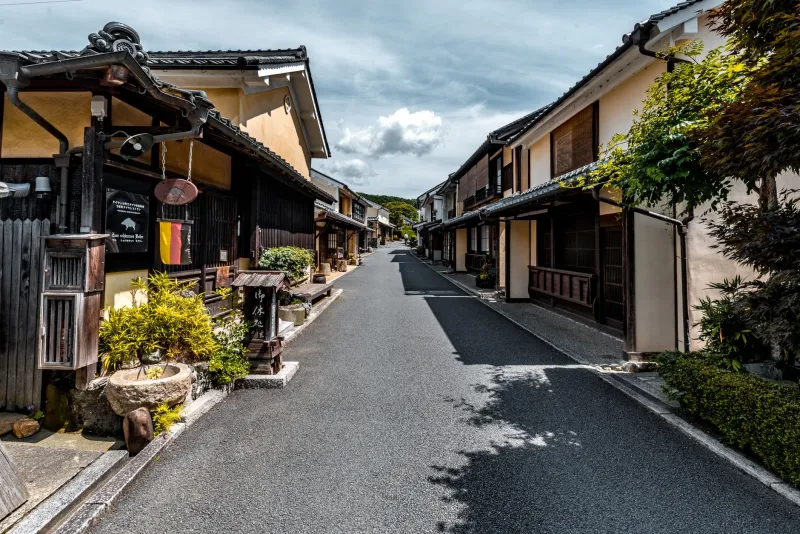
Most conversations about akiya investment focus on the purchase price — and understandably so. An abandoned rural home in Shimane or Tokushima can sometimes be acquired for less than the cost of a used car in the United States. But experienced investors will tell you that the more interesting financial story begins not at the closing table, but on the property tax bill.
Japan's property tax framework, known as kotei shisanzei, operates on principles that are fundamentally different from what American buyers are accustomed to. Understanding those differences — and the specific provisions that apply to abandoned and under-restoration properties — can shift the economics of a project considerably.
How Japanese Property Tax Is Structured
In Japan, property taxes are assessed annually by municipal governments based on two separate valuations: the land value and the building value. These assessments are not identical to market value. They are calculated according to a government-set standard and are typically lower than what a property might fetch on the open market — sometimes significantly so.
The standard property tax rate is 1.4 percent of assessed value. Urban planning taxes, which apply in designated zones, add another 0.3 percent. For most rural akiya, the urban planning tax is not relevant, which already places the carrying cost lower than many buyers expect.
What many buyers do not realize, however, is that the land portion of the tax bill is where the most consequential rules apply.
The Residential Land Reduction — and What Happens When a Building Is Removed
Japanese tax law provides a substantial reduction on land that is classified as residential. Specifically, land beneath a residence qualifies for a one-sixth reduction on assessed value for tax purposes on the first 200 square meters, and a one-third reduction on land beyond that threshold. This is known as the jutaku yochi tokurei, or residential land special provision.
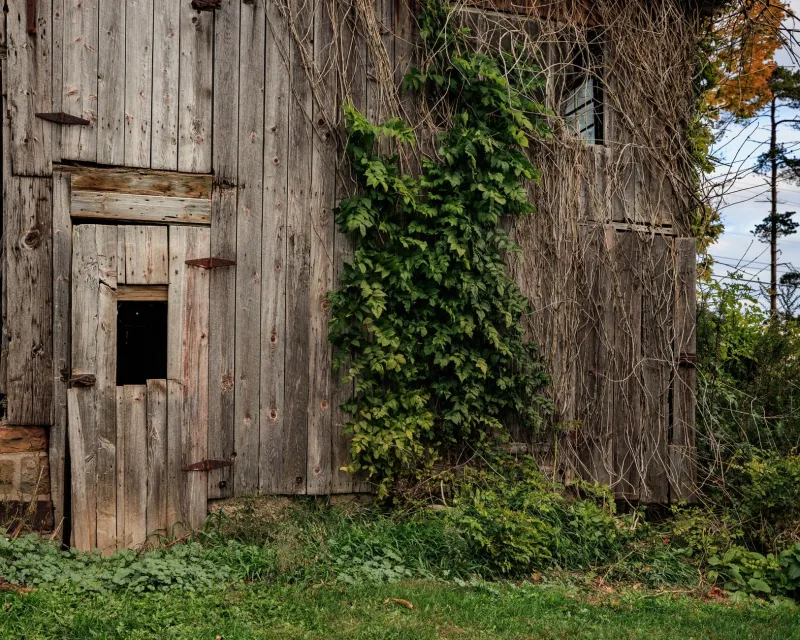
Here is where akiya buyers encounter a counterintuitive reality: when an abandoned structure is demolished without replacement, the land loses its residential classification. The tax on that parcel can increase by a factor of three to six virtually overnight. This is one reason why so many Japanese landowners have historically chosen to leave deteriorating structures standing rather than demolish them — the tax incentive to maintain a "residence," however dilapidated, was simply too strong to ignore.
For an American buyer, this dynamic creates a specific strategic opportunity. As long as a structure remains on the land — even during an active restoration — the residential reduction continues to apply. Restoration preserves the classification. Demolition eliminates it. This is not merely an academic point; it is a reason to pursue restoration over teardown whenever the structure is viable.
Assessed Value During Restoration: A Window of Reduced Liability
Building assessments are recalculated every three years in Japan. The assessed value of a structure reflects its condition, age, and materials. An older wooden home in a rural village — the archetypal akiya — typically carries an assessed building value that is already quite low, sometimes negligible. In certain cases, the building's assessed value has depreciated to near zero, meaning the effective property tax burden rests almost entirely on the land.
During an active restoration, the building's condition is, by definition, in flux. Municipalities do not always reassess mid-cycle, which means a buyer who acquires a property in the year following an assessment may benefit from a full three-year window of taxation at the pre-improvement rate. Completing major renovations early in an assessment cycle, rather than immediately before one, is a timing strategy that experienced advisors in Japan have used to defer the impact of increased valuations.
This is not a loophole in any pejorative sense. It is the natural consequence of how assessment cycles function, and it rewards buyers who plan their timelines deliberately.
Municipal Incentive Layers: Beyond the Base Code
While this article is principally concerned with the baseline tax code rather than incentive programs, it would be incomplete to ignore the layer of municipal-level provisions that can interact with base tax obligations.
A number of prefectures and municipalities have introduced temporary tax exemptions or reductions specifically for registered akiya properties that enter formal restoration programs. Nara, Hyogo, and several municipalities in Niigata have offered partial or full property tax waivers for periods ranging from one to five years, contingent on renovation commitments. These programs vary considerably and are not uniformly available, but they are worth investigating as part of any due diligence process.
When stacked on top of the base-rate advantages described above, these municipal provisions can reduce effective carrying costs during a restoration period to levels that would surprise most American real estate investors.
The Inheritance Tax Dimension
Many akiya properties in Japan are not sold outright but transferred through inheritance. For American buyers of Japanese descent pursuing ancestral properties — a topic this publication has addressed in detail elsewhere — the inheritance tax framework introduces additional complexity. Japan's inheritance tax rates are among the highest in the developed world, and the rules governing foreign heirs have been a persistent source of confusion.
However, properties that are actively used as residences by heirs may qualify for the kogakutochi tokurei, or small-scale residential land exemption, which can reduce the taxable value of inherited land by up to 80 percent. This provision applies under specific conditions and requires careful documentation, but it represents a substantial potential benefit for buyers who are simultaneously navigating inheritance and restoration.
Practical Implications for American Buyers
The tax structure described here does not operate automatically. Realizing these advantages requires deliberate coordination with a licensed Japanese tax accountant (zeirishi) and, in many cases, a judicial scrivener (shiho shoshi) who can ensure that property registrations are current and correctly classified.
American buyers should also be aware that property tax bills in Japan are issued to the registered owner. If a property has not been properly transferred into the buyer's name — a situation that is more common than it should be in the akiya market — the tax obligations and the legal ownership may not align. Resolving registration issues before or immediately after purchase is essential.
Finally, the three-year assessment cycle and the residential land classification rules create a genuine incentive structure that rewards restoration over demolition, active ownership over passive holding, and strategic timing over impulsive action. For American investors who approach Japan's akiya market with patience and preparation, the tax code is not simply a compliance obligation. It is, when understood correctly, a source of competitive advantage.