Reading the Signals: How to Assess a Village's Future Before Committing to Its Past
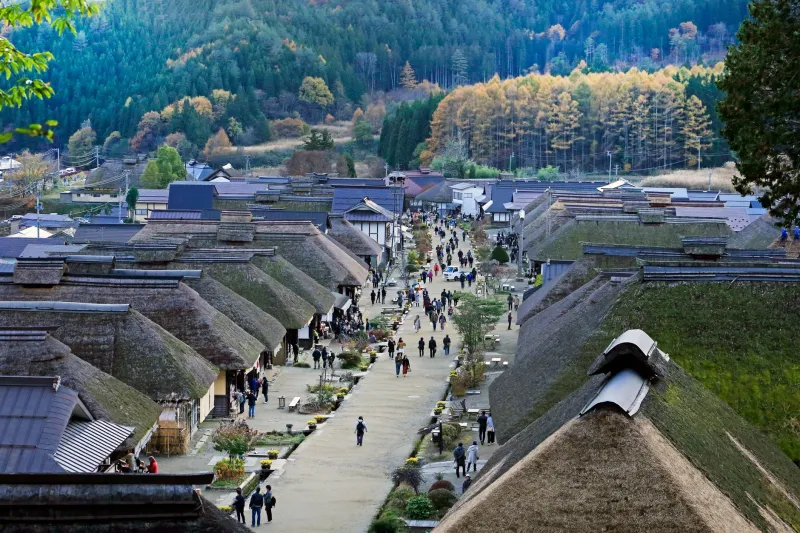
There is a version of akiya investment that looks romantic from a distance: the weathered farmhouse, the mountain backdrop, the sense of rescuing something beautiful from oblivion. That version is real, and it motivates many of the most committed buyers in this space. But beneath the aesthetic appeal lies a more practical question—one that deserves rigorous attention before any offer is made.
Is this village going to be here in twenty years?
The answer is not always obvious, and it is almost never found in the property listing itself. It lives in municipal data, school enrollment records, infrastructure budgets, and the quiet signals embedded in local government communications. Learning to read those signals is, in many ways, the most important skill an akiya buyer can develop.
Why Demographic Data Is the Starting Point
Japan publishes an unusual volume of granular demographic information at the municipal level. The National Institute of Population and Social Security Research releases projections for every municipality in the country, updated regularly, that estimate population trajectories through 2050. For a prospective akiya buyer, these projections are foundational.
A municipality projected to lose forty percent of its population by 2040 is a fundamentally different investment environment than one projected to lose ten percent. Both are declining—most rural Japanese communities are—but the rate and trajectory of that decline determine whether a village is likely to retain basic services, attract new residents, and maintain a functioning local economy over the investment horizon.
The projections are publicly available through the institute's website and, increasingly, through English-language interfaces designed to serve international researchers and investors. Cross-referencing these projections with current census data from the Statistics Bureau of Japan provides a useful picture of how actual population trends compare to earlier forecasts—a divergence in the optimistic direction is one of the more meaningful signals a community may be stabilizing.
School Enrollment as a Leading Indicator
Among the most reliable early indicators of community vitality is school enrollment data. Elementary schools in rural Japan are deeply embedded in community identity; their closure is both a symptom and an accelerant of decline. When a village school closes, young families with children have a powerful structural reason to leave.
Conversely, when enrollment stabilizes or—in rare and telling cases—begins to recover, it suggests that families with children are choosing to remain or relocate to the community. This is not a trivial signal. It indicates that the community offers something young families value: affordable housing, a quality of life unavailable in cities, proximity to nature, or some combination of these factors.
School enrollment data is typically published by prefectural boards of education and is often available in local government annual reports (行政報告, gyōsei hōkoku). For communities with active revitalization programs, enrollment trends are frequently cited in official communications as evidence of progress. A village that is proud of its enrollment numbers tends to publish them prominently.
What Infrastructure Investment Reveals
Capital investment decisions by municipal governments are among the most honest signals available to outside observers. A municipality that is investing in road maintenance, utility upgrades, broadband expansion, or community facility renovation is signaling, with its budget, that it believes the community has a future worth investing in.
Conversely, a municipality that is deferring infrastructure maintenance, consolidating public facilities, or visibly reducing service levels is communicating something quite different—even if official statements remain optimistic.
Japanese municipalities publish annual budgets (予算書, yosansho) that are typically available through local government websites. While these documents are in Japanese, machine translation has become sufficiently capable to extract the relevant patterns: Is capital expenditure increasing or decreasing? Are there line items for community revitalization programs? Is the municipality receiving national or prefectural grants for depopulation countermeasures?
The presence of active grant funding from national programs such as the Overconcentration Correction and Regional Revitalization initiatives is itself a meaningful indicator. It suggests the community has submitted a coherent revitalization plan, has been evaluated as viable by national reviewers, and is receiving resources to execute that plan.
Local Government Newsletters and What They Signal
Perhaps the most underutilized research resource available to prospective akiya buyers is the municipal newsletter (広報誌, kōhōshi). Published monthly or quarterly by virtually every Japanese municipality, these newsletters document the texture of community life in ways that demographic statistics cannot capture.
A newsletter that features profiles of new residents who moved from urban areas, announcements of new businesses opening, coverage of community festivals with photographs of diverse age groups, or reports on successful I-turn and U-turn migration programs is communicating genuine vitality. A newsletter dominated by announcements of service consolidations, memorial services for longtime residents, and appeals for volunteers to maintain aging infrastructure tells a different story.
Many municipal newsletters are now archived digitally and accessible through local government websites. Reading six to twelve months of back issues—even in translation—can provide a richer sense of community momentum than any single data point.
Distinguishing Revival Momentum from Terminal Decline
The distinction between a community in managed decline and one in genuine revival is not always sharp, but certain patterns tend to cluster on each side of the line.
Communities with revival momentum typically show: stable or recovering school enrollment, active I-turn migration programs with documented results, municipal investment in broadband and quality-of-life infrastructure, a visible cohort of younger residents and new businesses, and national or prefectural recognition as a revitalization success case.
Communities in more concerning trajectories tend to show: accelerating population loss outpacing national projections, school closures or consolidations in recent years, deferred infrastructure maintenance, an absence of active migration programs, and municipal budgets under significant fiscal stress.
Neither pattern is permanent. Communities can shift trajectories—sometimes rapidly, when the right combination of leadership, investment, and circumstance aligns. But as a framework for initial screening, these clusters provide a useful lens.
The Research Investment That Pays Dividends
For American buyers considering akiya properties, demographic due diligence is rarely glamorous work. It involves navigating Japanese government websites, cross-referencing statistics in an unfamiliar language, and drawing inferences from documents never designed for international audiences.
But this research investment pays dividends that no amount of property inspection can replicate. A structurally sound house in a community on a strong revitalization trajectory is a fundamentally different asset than an equally sound house in a village that may not sustain basic services within a decade.
The property records reveal the past. The demographic signals reveal the future. Both deserve careful attention before any decision is made.