What the Village Isn't Volunteering: Hidden Community Risk Factors Every Foreign Akiya Buyer Should Investigate
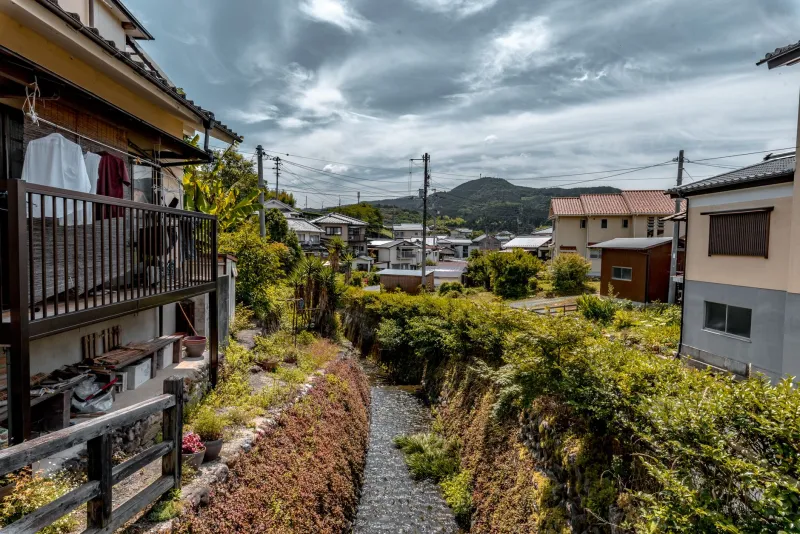
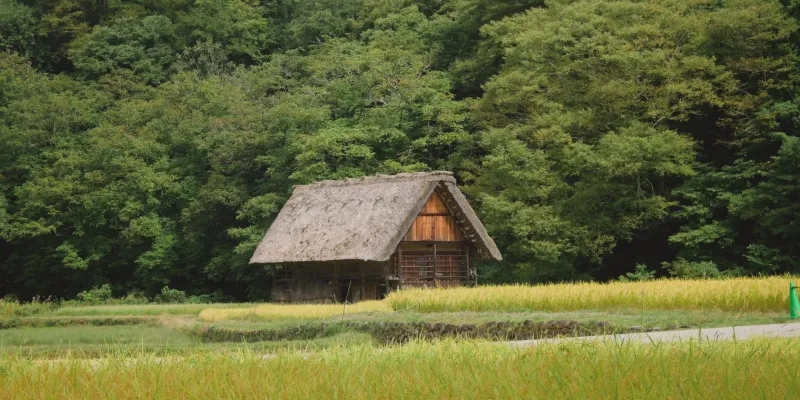
The listing photographs are often compelling: a weathered farmhouse framed by cedar trees, tatami rooms catching afternoon light, a garden that once flourished and might again. What no listing photograph captures is the condition of the community surrounding that property — the shrinking tax base, the school that closed three years ago, the road maintenance budget quietly deferred for the fifth consecutive fiscal year.
For American buyers entering Japan's akiya market, this gap between property-level due diligence and community-level investigation has proven, in more than a few cases, to be an expensive blind spot.
What Local Officials Know and What They Volunteer
Municipal officials in rural Japan operate under genuine constraints. They are, in most cases, sincere advocates for their communities. They want new residents, new economic activity, and renewed purpose for properties that have sat empty for years. That advocacy, however well-intentioned, can sometimes produce a selective presentation of facts.
"Nobody lied to us," said one American buyer who purchased an akiya in a mountainous prefecture in the Chugoku region. "But nobody told us that the water cooperative serving our neighborhood was technically insolvent, or that the road connecting our property to the prefectural highway was flagged for deferred maintenance. We found all of that out ourselves, over about eighteen months of living there."
This experience is not unusual. Municipal planners interviewed for this article acknowledged that promotional materials prepared for foreign buyer programs — and the conversations that accompany them — tend to emphasize opportunity rather than institutional fragility. One regional planning official, speaking on condition of anonymity, put it plainly: "We are trying to attract people. We present the vision. The problems are in the budget documents, and those are public, but nobody thinks to ask for them."
The Infrastructure Prioritization Problem
Japan's rural municipalities face a mathematical reality that has no comfortable solution. As populations decline, the per-capita cost of maintaining roads, water systems, waste collection, and emergency services rises. Prefectural and national governments have increasingly shifted infrastructure funding toward urban corridors and regions with stronger demographic outlooks. The result, in many rural communities, is a quiet triage — some neighborhoods receive sustained investment, others are effectively deprioritized.
For an akiya buyer, the difference between a property in a prioritized zone and one in a deprioritized zone can be substantial. A home in a deprioritized neighborhood may face deteriorating road access within a decade, reduced or eliminated public transit options, and the gradual withdrawal of commercial services as remaining residents relocate or age out of independent living.
Identifying which category a specific property falls into requires asking questions that most real estate brokers — operating on transaction incentives — have little reason to raise. Municipal comprehensive plans, known in Japanese administrative language as sogo keikaku, typically outline infrastructure investment priorities over ten- to twenty-year horizons. These documents are public record. They are also rarely translated, rarely summarized for foreign buyers, and almost never referenced in property listings.
Aging Leadership and Institutional Continuity
A subtler risk factor involves the age and succession of village leadership itself. Many rural Japanese municipalities are governed by officials who are themselves approaching or past retirement age, in communities where younger administrative talent has migrated to urban centers. When institutional knowledge is concentrated in a small number of aging officials, and no succession pipeline exists, the administrative capacity of the municipality can deteriorate rapidly.
This matters to property owners in concrete ways. Grant programs for akiya restoration, subsidized renovation loan schemes, and rural revitalization initiatives all require functional municipal administration to access. Buyers who purchase a property partly on the basis of available incentive programs may find, several years later, that the local officials who administered those programs have retired, their replacements are unfamiliar with the relevant procedures, and the programs themselves have lapsed without renewal.
"We had been told there was a renovation subsidy available through the town," recalled a buyer who purchased property in a coastal Tohoku community. "By the time we were ready to apply, the town had merged with a neighboring municipality, the subsidy program had not been carried over, and the new combined office had a backlog of administrative transitions to work through. It wasn't anyone's fault. It was just the reality of a system under significant stress."
The Community Health Audit: A Framework Emerging Among Savvier Buyers
In response to these challenges, a practice that some buyers and advisors are informally calling a "community health audit" has begun to take shape. Rather than limiting pre-purchase investigation to the physical property, buyers conducting these audits gather and analyze a broader set of municipal indicators before committing capital.
The audit typically covers several domains. Population trajectory data — available through Japan's national census and prefectural statistical offices — reveals not just current population but the rate and composition of decline, which can indicate how quickly service thresholds may be crossed. Municipal budget documents, particularly multi-year fiscal projections, indicate whether the local government is operating with structural deficits and where spending reductions are being applied. School enrollment figures serve as a reliable proxy for family-age population, and school closure announcements often precede broader community contraction by five to ten years.
Beyond documents, experienced buyers recommend direct conversation with residents rather than officials — ideally with neighbors in the immediate vicinity of the target property. Residents tend to offer candid assessments of neighborhood trajectory that official communications do not. Questions about recent business closures, changes in local services, and the general direction of the community over the past five years can surface information that no amount of document review will reveal.
Questions Most Brokers Never Ask
For buyers working with real estate brokers — whether Japanese-speaking local agents or internationally oriented intermediaries — a specific set of questions can help surface community-level risks that standard transaction processes leave unexamined.
Is the property served by a public water system or a private cooperative, and what is the financial condition of that cooperative? Is the access road maintained by the municipality, a local road association, or private arrangement, and is there a documented maintenance budget? Has the municipality produced a rikkoku keikaku — a regional resilience or consolidation plan — and if so, does the property's neighborhood appear within it? Are there pending or projected changes to public transit, postal services, or healthcare access within a ten-kilometer radius?
These are not adversarial questions. Most municipal officials will answer them directly when asked. The issue, consistently, is that they are not asked.
Due Diligence as an Act of Commitment
At Akiya Rescue, we have long maintained that purchasing an abandoned Japanese property is not simply a real estate transaction — it is an act of participation in a community's future. That framing cuts both ways. It means that buyers bring genuine value to struggling villages. It also means that buyers carry genuine exposure to the risks those villages face.
The most successful akiya investors we have observed share a common characteristic: they enter communities with curiosity rather than assumption. They read budget documents, ask uncomfortable questions, and invest time in understanding the institutional landscape before they invest money in a structure. They recognize that a beautifully restored farmhouse in a community without a viable future is a more complicated proposition than a modest home in a community with the organizational capacity to support its residents.
The silence before the sale is not necessarily deceptive. But it is meaningful. Learning to fill that silence with the right questions is, increasingly, the difference between a rescue and a regret.