Patience as Strategy: How American Investors in Rural Japan Are Watching Forgotten Properties Quietly Gain Ground
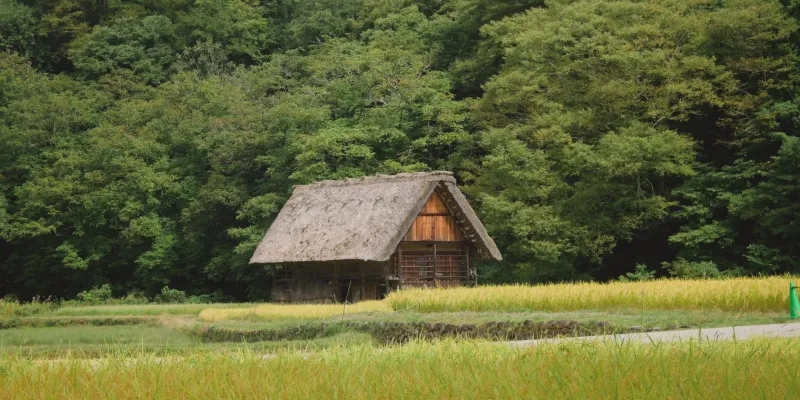
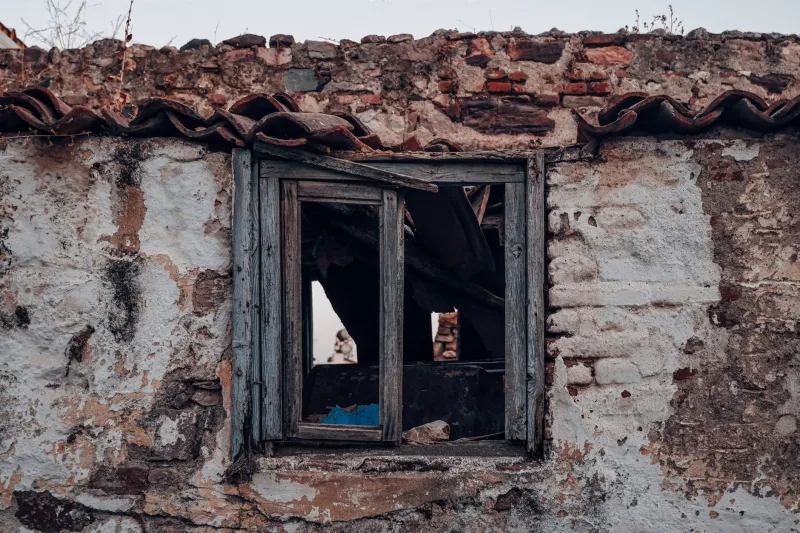
In the summer of 2015, a retired civil engineer from Portland, Oregon, purchased a vacant farmhouse in Shimane Prefecture for the equivalent of roughly $18,000. The property had sat empty for eleven years. The roof needed replacement, the tatami rooms were warped with moisture, and the nearest convenience store was a twelve-minute drive. By nearly every conventional metric, it was not an attractive asset.
Today, following a phased restoration completed with the help of local contractors and partial subsidies from the prefectural government, that same property is listed on a short-term rental platform and has attracted serious acquisition inquiries from a Japanese logistics entrepreneur looking to relocate operations outside the Osaka metropolitan area. Conservative estimates place its current market value at three to four times the original purchase price — not including the rental income accumulated over the past three years.
This is not an isolated story. Across Japan's rural prefectures, a quiet but measurable shift is underway, and American investors who entered the akiya market early are increasingly well-positioned to benefit from it.
The Conditions That Drove Early Buyers In
To understand the present moment, it helps to revisit the circumstances that made akiya properties so accessible in the first place. Japan's rural depopulation crisis accelerated sharply through the 1990s and 2000s as younger generations concentrated in Tokyo, Osaka, and Nagoya. Villages that once sustained themselves through agriculture, forestry, and small-scale manufacturing saw their populations contract by thirty, forty, sometimes fifty percent within a single generation.
The result was a surplus of abandoned residential properties — the akiya — that municipalities struggled to manage and that heirs, often living far away, had no practical means to maintain. Prices collapsed not because the structures themselves were without value, but because demand had effectively evaporated.
For American buyers who understood this dynamic, the entry point was historically low. Properties that would have commanded respectable prices in the 1980s were available for sums that, in many U.S. markets, would not cover a used automobile. The risk was real — deferred maintenance, unclear title histories, and the logistical challenges of managing property from overseas — but so was the potential.
What Has Changed in the Past Five Years
Several converging forces have begun to alter the calculus for akiya properties in specific regions.
First, Japanese national and prefectural governments have substantially expanded their financial incentive programs for rural property restoration. Subsidies that once covered modest renovation costs have been restructured in prefectures such as Tokushima, Tottori, and Nagano to cover up to fifty percent of qualifying rehabilitation expenses. This reduces the effective cost of bringing a neglected property to habitable condition — and it signals institutional commitment to rural recovery that was less visible a decade ago.
Second, the COVID-19 pandemic produced a structural shift in Japanese residential preferences that has proven more durable than many analysts initially expected. Remote and hybrid work arrangements have enabled a segment of younger Japanese professionals — particularly those in technology, design, and consulting — to depart major metropolitan centers without sacrificing their income. The term inaka gurashi, roughly translated as rural living, has migrated from nostalgic aspiration to practical lifestyle choice for a meaningful subset of the workforce.
Third, international tourism infrastructure has expanded into regions that were largely bypassed by earlier waves of foreign visitors. Prefectures along the Japan Sea coast, inland mountain corridors, and the Seto Inland Sea basin have each seen increases in visitor traffic that have, in turn, created demand for distinctive short-term accommodations — demand that well-restored akiya properties are uniquely positioned to meet.
Regions Showing the Strongest Signals
Not all rural prefectures are experiencing the same trajectory, and geographic specificity matters considerably for investors evaluating entry or expansion.
Tokushima Prefecture, on Shikoku Island, has attracted particular attention. The prefecture's aggressive remote-worker recruitment program, which at various points has offered direct financial incentives to individuals relocating from Tokyo, has created a small but growing professional population with genuine interest in traditional residential properties. Akiya prices in select Tokushima towns have risen modestly but consistently over the past four years.
Nagano Prefecture benefits from its established identity as a destination for outdoor recreation, cultural tourism, and agricultural heritage. Properties in the Azumino and Matsumoto areas have seen the sharpest appreciation among akiya assets, driven partly by domestic second-home demand and partly by the prefecture's proximity to the Tokyo metropolitan area via bullet train.
Tottori and Shimane Prefectures, historically among Japan's least densely populated, have become something of a testing ground for rural revitalization policy. Local governments in both prefectures have been notably receptive to foreign buyers willing to commit to restoration, and the combination of low entry prices, available subsidies, and improving tourism infrastructure makes the region worth serious attention from patient investors.
The Profile of the Investor Who Benefits
It would be misleading to suggest that akiya appreciation is occurring uniformly or rapidly. The investors who have realized the strongest outcomes share a recognizable profile: they entered at low cost, they committed to genuine restoration rather than minimal cosmetic improvement, they engaged meaningfully with local communities and municipal offices, and — critically — they held.
The American real estate market tends to reward velocity. Buy, improve, sell, repeat. The akiya market, particularly in its current phase, rewards a different temperament. The gains being realized now by early buyers are the product of five, seven, sometimes ten years of patient stewardship. That timeline is not suited to every investor, and it should not be misrepresented as a shortcut to returns.
What it does represent, for those with the appropriate horizon and tolerance for complexity, is a genuinely differentiated asset class — one in which the competitive field remains thin, the acquisition costs remain historically low relative to comparable rural properties in Western markets, and the structural drivers of appreciation are, for the first time in decades, pointing in a constructive direction.
Entering the Market Now
For American investors considering their first akiya acquisition, the window of maximum accessibility is narrowing, though it has not closed. Properties in the most actively revitalizing regions are beginning to attract domestic Japanese interest that was largely absent five years ago. Prices in the strongest-performing areas have risen, though they remain modest by any international comparison.
The more consequential question may not be whether to enter, but how to enter wisely — with clear-eyed assessment of restoration costs, a realistic understanding of local regulatory frameworks, and a genuine commitment to the communities in which these properties sit.
The farmhouse in Shimane did not appreciate because markets are efficient or because speculation drove prices upward. It appreciated because someone chose to care for it, to restore what had been neglected, and to remain present in a community that had grown accustomed to watching people leave.
In the akiya market, that is still, more than any financial model, the foundation of durable value.