Building Something That Lasts: American Entrepreneurs Finding Purpose — and Profit — in Japan's Emptying Villages
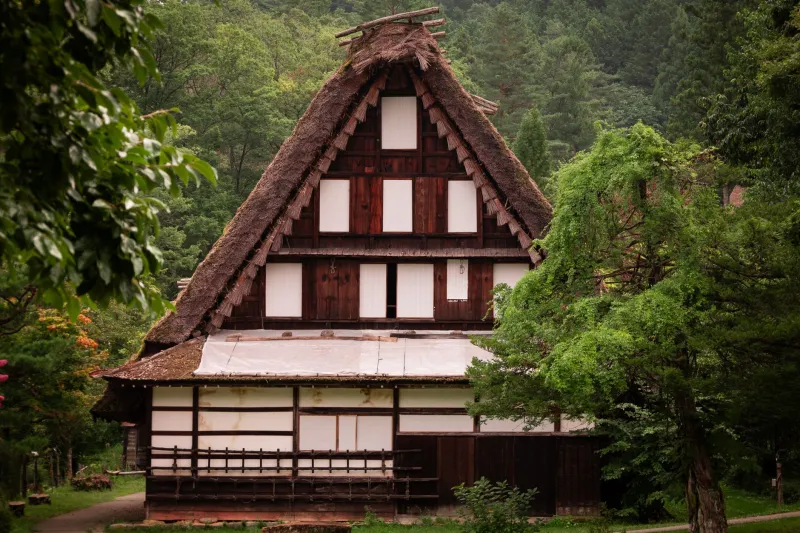
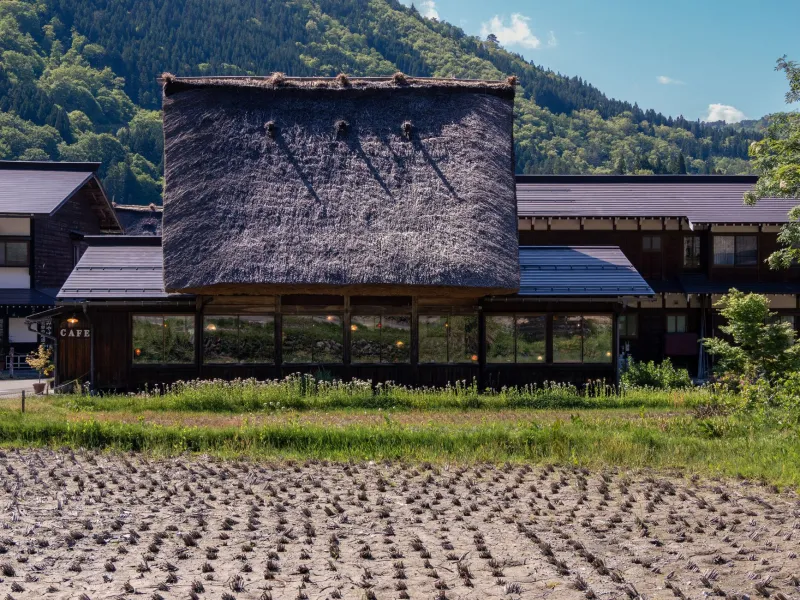
The conversation about akiya in American media tends to gravitate toward two poles. At one end sits the romance of the cheap farmhouse — the $10,000 minka, the Instagram-ready renovation, the life reinvented. At the other sits the sober investment calculus — cap rates, yen hedging, demographic headwinds. Both framings have merit. Neither captures what is quietly emerging as perhaps the most consequential category of foreign engagement with Japan's abandoned property stock: the entrepreneur who arrives not to inhabit a house, but to build a business inside a dying community.
These individuals are neither tourists nor speculators. They are, in a meaningful sense, the most committed actors in the rural revitalization story — and their ventures are generating the kind of durable economic activity that property transactions alone cannot produce.
Why Rural Japan, Why Now
The conditions that make rural Japan attractive to purpose-driven entrepreneurs are structural rather than incidental. Land and building costs are low enough to be essentially non-prohibitive for small-scale ventures. The physical environment — mountains, rivers, forests, rice paddies, coastlines — is exceptional by any measure. Traditional food culture, craft traditions, and agricultural knowledge persist in these communities even as the populations that carry them age and contract.
What has changed in recent years is the institutional environment. Municipal governments across Japan have moved from passive acceptance of rural decline to active solicitation of outside investment and immigration. Many now offer subsidized renovation grants for akiya put to commercial use, reduced business registration fees for new enterprises, and dedicated liaison staff to help foreign entrepreneurs navigate the bureaucratic landscape. The national government's regional revitalization agenda (chiho sosei) has created additional funding streams and policy support for ventures that demonstrate a commitment to long-term community engagement.
For American entrepreneurs accustomed to the high barriers of entry in domestic markets — commercial real estate costs, regulatory complexity, competitive saturation — the combination of low overhead and genuine community need in rural Japan represents something genuinely unusual.
The Farm-to-Table Restaurateur
Among the earliest and most visible category of akiya-based entrepreneurs are those who have built food businesses rooted in local agriculture. The model is familiar to American audiences from the farm-to-table movement, but in rural Japan it takes on additional dimensions: the sourcing relationships are hyperlocal, the ingredient traditions are ancient, and the audience increasingly includes both domestic Japanese tourists seeking reconnection with regional food culture and international visitors drawn by the authenticity that urban dining cannot replicate.
Jennifer M., a former restaurant manager from Austin who opened a small kaiseki-influenced dining room in a restored kominka in rural Shimane Prefecture, describes the business logic plainly: "The building cost me almost nothing compared to what a commercial space in Austin would have cost. The farmers here were desperate for someone to buy their vegetables and tell people about them. And there's a real audience — Japanese city dwellers who want to eat this kind of food in this kind of setting. The margins are modest, but the overhead is low enough that it works."
Her operation employs three local residents, sources almost exclusively from within a fifteen-kilometer radius, and has become, by her account, a genuine gathering point for a village that had lost its last restaurant nearly a decade before her arrival.
The Workshop and the Craft Economy
A second significant category involves the revival or adaptation of traditional craft practices through artisan workshop models. Japan's rural regions contain extraordinary concentrations of craft knowledge — urushi lacquerwork, indigo dyeing, hand-forged metalwork, traditional carpentry, ceramics — that are approaching extinction as master practitioners age without successors.
American entrepreneurs with backgrounds in design, craft, or education have found in this situation both a business opportunity and a form of cultural stewardship. Several have established workshop operations that combine production — creating goods for sale through domestic and international channels — with educational programming that draws students from the United States and elsewhere.
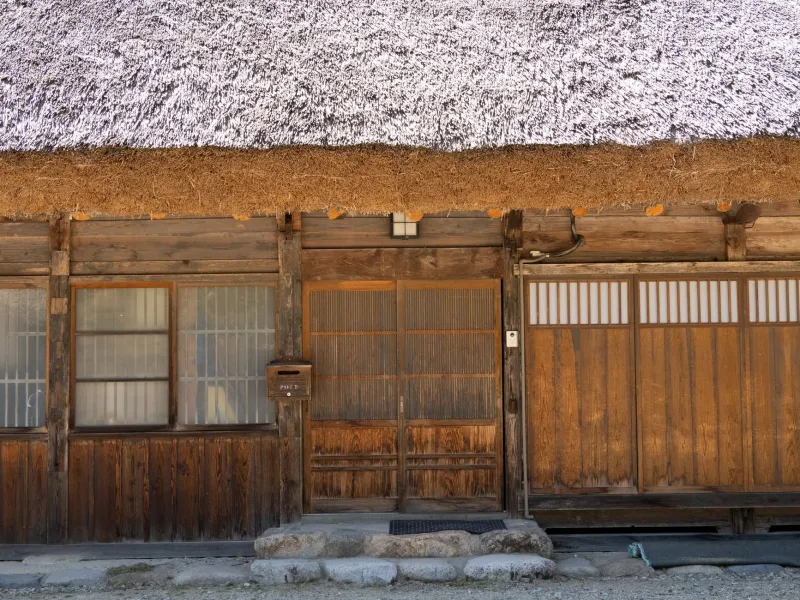
David R., a woodworker from Portland who established a joinery workshop in a restored agricultural building in Gifu Prefecture, has built a model that generates revenue from three streams: commissioned furniture sold internationally, week-long intensive workshops for foreign craftspeople, and a small-batch architectural hardware line sold through Japanese design retailers. The restored building itself, a former granary (kura), serves as both production space and teaching environment — a physical argument for the value of preservation.
"The building is part of the product," he said. "People come here to learn joinery in a space that was built using the same principles. That's not something you can replicate in a purpose-built workshop."
Retreat Centers and the Experience Economy
Perhaps the most rapidly expanding category is the experiential retreat — a model that leverages Japan's natural environment, architectural heritage, and cultural depth to create immersive hospitality experiences that command premium pricing from both domestic and international guests.
Restored akiya, particularly large farmhouses of the gassho-zukuri or nōka type, are architecturally well suited to small-group retreat formats. Their scale, their relationship to the surrounding landscape, and the sensory qualities of their interiors — the smell of aged timber, the quality of light through shoji screens, the sound of a nearby stream — create conditions for the kind of focused, contemplative experience that urban life systematically forecloses.
Several American operators have built viable businesses around retreat formats focused on wellness, creative practice, language immersion, or ancestral heritage exploration — the latter category drawing particular interest from Japanese Americans seeking structured engagement with rural Japan. These operations typically run at small scale by design, accepting between six and twelve guests per session, and often achieve occupancy rates that would be the envy of conventional hospitality operators.
The Community Dimension
What distinguishes the most successful of these ventures from simple lifestyle businesses is their embeddedness in the communities they inhabit. The entrepreneurs who thrive over the long term are those who understand, and act on, the principle that their business exists within a social ecosystem — not apart from it.
This manifests in hiring practices that prioritize local residents, in sourcing decisions that sustain local producers, in participation in community events and governance structures, and in the kind of patient relationship-building that earns genuine acceptance over time. Japan's rural communities have seen enough well-intentioned outsiders arrive with grand plans and depart within two years to be appropriately skeptical of newcomers. The entrepreneurs who overcome that skepticism do so through demonstrated commitment — staying, hiring, buying locally, and showing up when the community needs something.
The economic contribution of these ventures, while modest at the scale of any individual business, is significant in aggregate and in proportion to the communities they serve. A restaurant that employs three people and sources from a dozen farms is a material economic actor in a village of three hundred. A workshop that draws twenty international visitors per month is a meaningful contribution to local accommodation and service businesses.
What the Akiya Makes Possible
Underlying all of these ventures is a simple economic fact: the low cost of acquiring and restoring an akiya makes business models viable that would not survive in higher-cost environments. A restaurateur who might spend $500,000 on a commercial lease in a mid-size American city can establish a comparable operation in rural Japan for a fraction of that figure — and the difference in capitalization requirements changes everything about what is financially feasible.
This is, in essence, what akiya rescue means at its most expansive: not merely the preservation of a building, but the creation of conditions in which something genuinely new can be built inside the shell of something old. The entrepreneurs arriving in Japan's emptying villages are not saving the past. They are using it as the foundation for a different kind of future — one that the communities they've joined are, in many cases, beginning to believe in again.