What Empty Houses Tell Us: Akiya, Rural Decline, and the Art of Remembering a Place
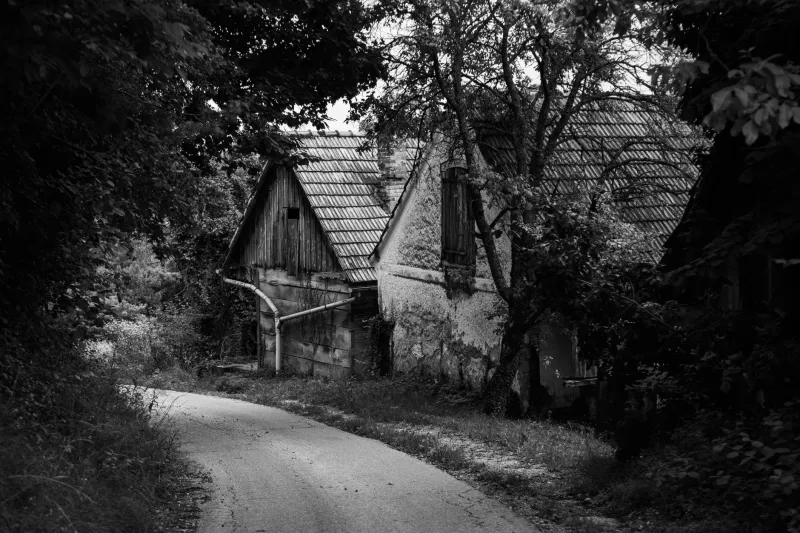
There is a particular kind of silence that settles over a village when its last residents have gone. It is different from the ordinary quiet of a countryside afternoon — deeper, more absolute, carrying within it the absence of everything that once made a place alive. In rural Japan, that silence has spread across thousands of communities over the past several decades, leaving behind a landscape of closed storefronts, overgrown gardens, and homes whose shuttered windows have not opened in years.
These abandoned properties — akiya, in Japanese, meaning literally "empty house" — have become one of the most visible symptoms of a demographic transformation that is reshaping Japan at its foundations. But to understand them only as a real estate category is to miss what they are really saying.
A Nation Aging Faster Than Any Other
Japan holds a distinction that carries little celebration: it is the world's most rapidly aging society. More than 29 percent of its population is currently over the age of 65, a figure that demographers project will climb toward 40 percent by mid-century. The country's birth rate has fallen to historic lows, and net immigration — long suppressed by policy and cultural convention — has not come close to compensating for the decline.
The consequences of this shift are not evenly distributed. Major urban centers, particularly Tokyo, have retained population through internal migration — the movement of younger Japanese from rural prefectures toward cities that offer employment, education, and the social infrastructure of modern life. What is left behind in the countryside is a population that is older, smaller, and contracting further with each passing year.
For Americans, this trajectory is not entirely foreign. The United States has its own version of rural hollowing — the post-industrial Midwest, the declining agricultural towns of the Great Plains, the Appalachian communities that lost their economic anchors over the course of a generation. The specific causes differ, but the pattern of young people leaving and older residents remaining until the community reaches a kind of demographic endpoint is recognizable across cultures.
What Gets Left in an Empty House
The human dimension of akiya is often the detail that strikes visitors and researchers most powerfully. These are not simply vacant structures. Many were left quickly, or left by people who expected to return and never did — who moved to assist aging parents in a city, or entered a care facility, or passed away without heirs willing or able to maintain the property.
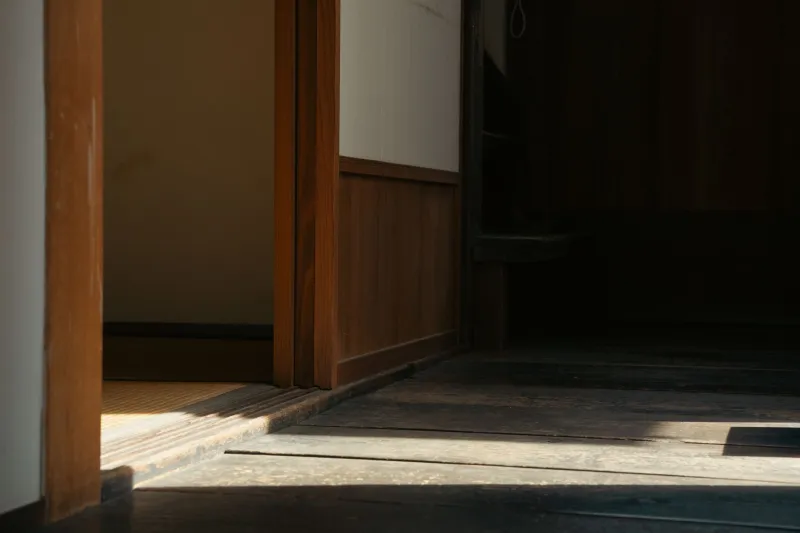
Insides of akiya frequently contain the accumulated material of lives: furniture arranged as if its owners stepped out that morning, family photographs still hanging on walls, kitchen implements stored in their customary places, Buddhist household altars that have not received offerings in years. Clothing hangs in closets. Books line shelves. Calendars mark years that have long since passed.
This is not mere sentiment. It reflects something specific about the social and legal conditions that produce akiya. Japanese inheritance law and family registry systems can make property transfer complicated, particularly when multiple heirs are involved or when heirs live abroad or have severed connection with ancestral regions. The result is that properties sometimes remain in legal limbo — technically owned but functionally abandoned — for extended periods.
There is also a cultural dimension. Japanese concepts of place and belonging are deeply tied to ancestral homes. Selling or demolishing a family property can carry emotional weight that makes inaction feel more bearable than decision, even when the decision to act would serve everyone's practical interests better.
Architecture as Memory
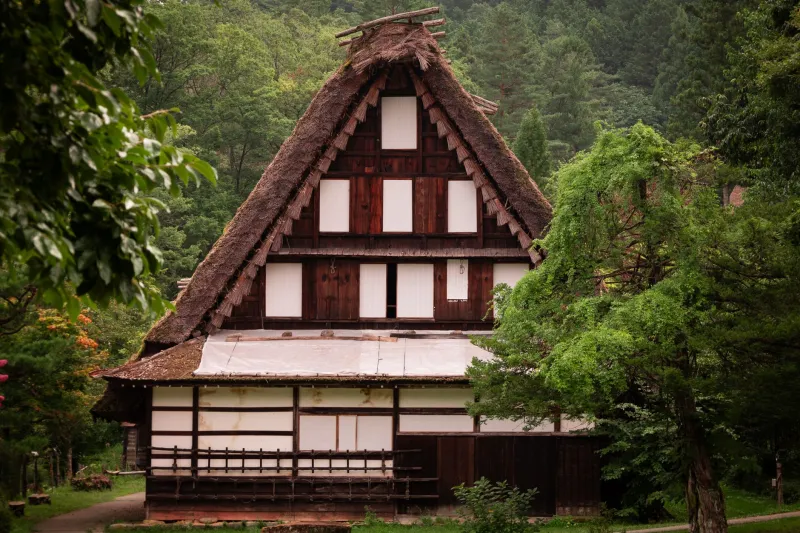
The homes themselves are worth examining as cultural artifacts. Traditional Japanese rural architecture — the minka farmhouses of the mountain regions, the machiya townhouses of former commercial districts, the nagaya row houses of agricultural communities — represents a sophisticated body of building knowledge developed over centuries. These structures were designed to respond to specific climatic conditions, to accommodate the rhythms of agricultural life, and to express regional aesthetic traditions that varied meaningfully from prefecture to prefecture.
When these buildings are demolished — as many are, either by municipal order when they become safety hazards or by families clearing land for sale — what disappears is not merely a structure but a form of knowledge. The joinery techniques used by the carpenters who built these homes, the material choices that reflect local resource availability, the spatial arrangements that encoded particular ways of living together — all of this is embodied in the physical fabric of the building in ways that no photograph or written record can fully preserve.
Restoration, in this context, is a form of cultural documentation. It keeps the building legible as a record of the community and the era that produced it.
The Parallel Conversation in America
Americans are not unfamiliar with the question of what happens to places when the people who gave them meaning are gone. It is a question that has animated debates about historic preservation in cities undergoing rapid development, about the fate of manufacturing towns whose industrial anchors closed, about Native American communities whose sacred sites face pressure from commercial interests.
What is perhaps less familiar is the idea that the response to this kind of loss need not come exclusively from within the affected community. Japan's akiya crisis has produced, almost accidentally, an international network of people who have chosen to engage with these empty places — not out of charity, but out of genuine interest in what they offer: affordability, beauty, cultural richness, and the particular satisfaction of contributing to something that matters.
This is not colonization of a foreign landscape. It is, at its best, a form of stewardship — one that requires humility, genuine engagement with local communities, and a willingness to be changed by the place as much as to change it.
Rescue as Preservation
The word "rescue" in our organization's name is chosen deliberately. It acknowledges that these properties are at risk — not of fire or flood, though those dangers exist, but of the slower erosion of neglect and the permanent loss that comes with demolition. A restored akiya is a property that will continue to exist, to be inhabited, to contribute to the life of its community. An unrestored one faces an uncertain future.
For international buyers who undertake restoration projects, the rewards are rarely only financial. They describe the experience of working within a traditional structure, of learning its particular logic, of coming to understand the community in which it sits — as something that reshapes their relationship to place itself. Several restoration owners have spoken of developing a sense of obligation to the property and the village around it that they did not anticipate when they began.
That sense of obligation is, in a way, exactly what rural Japan needs from those who choose to engage with its empty houses. Not buyers who treat akiya as exotic bargains to be flipped or exploited, but people willing to take seriously the responsibility of becoming part of a place — of adding their own chapter to the long story that a house has already been telling.
The houses are waiting. They have been patient, as old buildings tend to be. What they need now is not simply repair, but recommitment — the presence of people who understand what they represent and are willing to help them continue.