Studio in the Satoyama: How American Makers Are Building Creative Lives Inside Japan's Empty Villages
When a Workshop Is Also a World
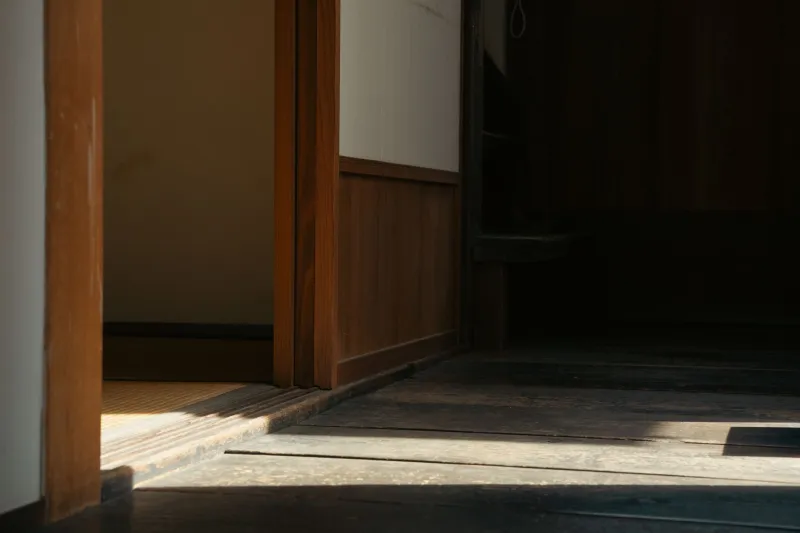
There is a particular kind of light that enters an old Japanese farmhouse in the morning hours. It filters through shoji screens, diffuses across worn cedar floors, and settles into the kind of stillness that is increasingly difficult to find anywhere in the modern world. For a growing number of American artists and craftspeople, that light—and everything it represents—has become both a creative resource and a professional proposition.
Across rural prefectures from Tottori to Akita, a distinct subset of the akiya rescue movement is taking shape. These are not retirees seeking quietude, nor are they investors calculating yield. They are makers: potters, woodworkers, textile artists, fermentation specialists, natural dye practitioners, and small-batch food producers who have recognized in Japan's abandoned countryside something that is nearly impossible to replicate in the United States—affordable, generous, character-rich space in communities that have deep traditions of the very crafts they practice.
The Economics of the Live-Work Studio
For working artists in American cities, the economics of studio space have become genuinely prohibitive. A modest shared ceramics studio in a mid-tier American city now commands monthly fees that can exceed the annual property taxes on a rural Japanese home. Private workspace sufficient for a woodworking operation or a natural textile studio is, in many markets, simply inaccessible to independent makers operating without institutional support.
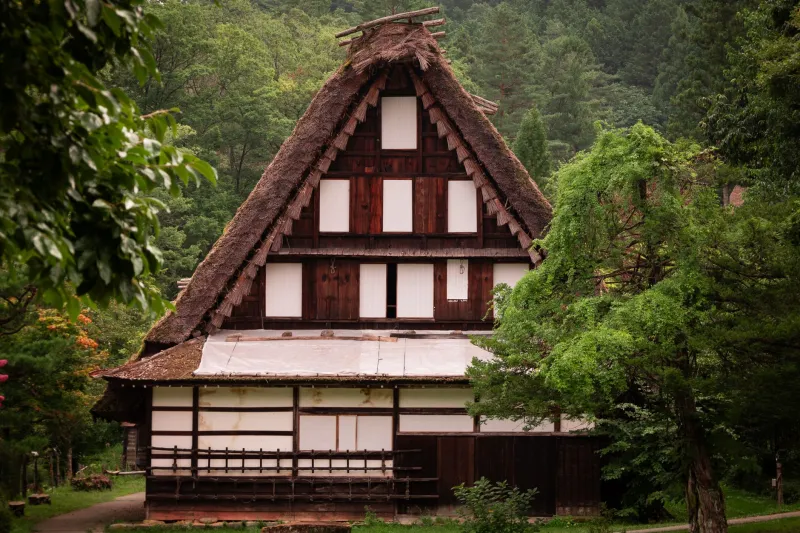
Against this backdrop, the akiya proposition takes on a different character. A former agricultural building in Shimane Prefecture, with its generous ceiling heights, earthen floors, and proximity to locally sourced raw materials, represents not just affordable living but a fundamentally different model for sustaining a creative practice.
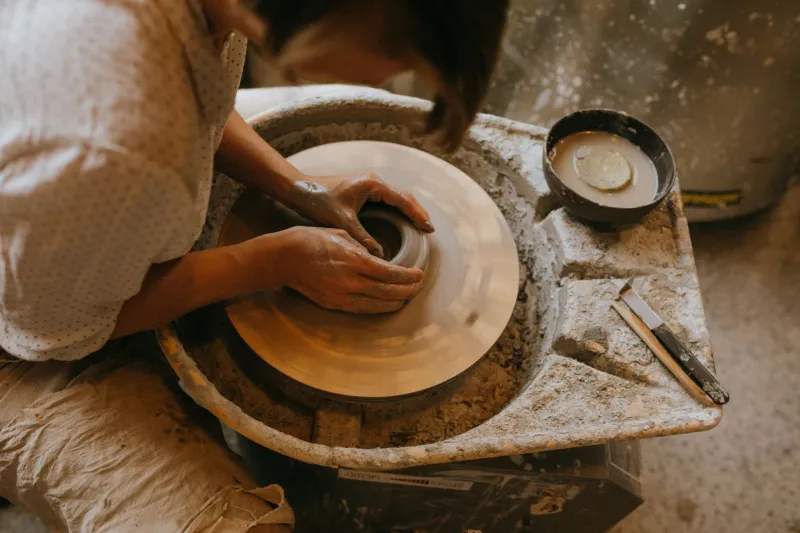
Jessica Albright, a ceramicist from Asheville, North Carolina, completed the purchase of a decommissioned farmstead in Tottori in 2021. The property included a main residence, a detached storage building she has converted into a kiln room, and approximately a third of an acre of land she uses to source clay-adjacent materials for surface treatments. Her monthly overhead for the entire operation—property costs, utilities, and basic maintenance—runs to a fraction of what she previously paid for a shared studio in her home city.
"I'm not romanticizing it," she is careful to say. "The first winter was genuinely hard. The restoration cost more than I planned. But I'm making work I couldn't have made in Asheville, at a pace I couldn't have sustained there, and I'm selling it to collectors who specifically value the provenance."
That final point matters. For many maker-buyers, the Japanese rural origin of their work is not incidental—it is integral to their market positioning.
Craft Communities as Connective Tissue
One dimension of this movement that distinguishes it from conventional akiya acquisition is its relationship to existing local craft traditions. Rural Japan is not a craft vacuum. Many of the villages experiencing the most severe depopulation are precisely those with the longest histories of specialized production—Mashiko-style pottery, Iga weaving, regional lacquerwork, traditional carpentry techniques. The departure of younger generations has left these traditions underresourced and, in some cases, at genuine risk of discontinuity.
American makers who arrive with genuine curiosity and a willingness to apprentice—formally or informally—to remaining local practitioners often find themselves welcomed in ways that purely residential buyers are not. The exchange is not always symmetrical, and it requires cultural humility that not every buyer brings. But when it works, the result is a form of creative and communal renewal that benefits both the incoming maker and the village they have joined.
Thomas Nakagawa, a third-generation Japanese American woodworker from Seattle, purchased an akiya in a mountain village in Gifu Prefecture in 2020, partly because the region has a centuries-old tradition of timber joinery. Within his first year, he had established a working relationship with an elderly local carpenter whose techniques he is now documenting in addition to incorporating into his own practice.
"I came to make furniture," he says. "I'm still doing that. But what I'm actually doing is more complicated and more interesting than I expected."
Production, Not Just Practice
Not all maker-buyers are artists in the conventional sense. A smaller but notable cohort consists of food and beverage entrepreneurs—small-batch fermenters, specialty tea producers, natural wine enthusiasts—who are drawn to rural Japan for reasons that are as much agricultural as they are aesthetic.
Japan's rural countryside offers access to heritage grain varieties, traditional fermentation cultures, and water sources with mineral profiles that are difficult or impossible to source in the United States. For producers whose work depends on ingredient specificity and provenance, an akiya in the right region can function as both production facility and supply chain.
Caroline Voss, a miso and koji producer from Portland, Oregon, acquired a former farmhouse in Yamagata Prefecture in 2022. The property's existing root cellar, with its naturally regulated temperature and humidity, has become the centerpiece of a fermentation operation that she now ships—in limited quantities, through a carefully structured import arrangement—to specialty food retailers in the Pacific Northwest.
"The building was built for this," she says of the property's aging infrastructure. "The people who lived here for generations were fermenting things in that cellar. I'm doing the same thing. That continuity feels important to me."
What This Means for the Villages
The arrival of American makers in depopulating Japanese villages is not without complexity. Questions of cultural appropriation, community integration, and the long-term sustainability of foreign-resident creative enterprises deserve honest consideration. Not every arrival story has a straightforward ending, and the makers themselves are among the first to acknowledge the ongoing work of belonging.
What is clear, however, is that these acquisitions—when undertaken with care and genuine community engagement—represent one of the more durable models of akiya rescue currently in practice. A live-work studio occupied by a committed maker is not a speculative asset. It is a functioning part of a village's economic and cultural fabric, and its presence tends to generate the kind of quiet, sustained vitality that rural municipalities are increasingly desperate to cultivate.